Hanoi nightlife is a handful of small scenes, each with its own price and its own closing time, and for bars and beer corners that time is midnight. I treat the city as an early evening that ends on a pavement, not as a night that slides toward dawn. The only licensed exceptions are the nightclubs, which are allowed to run until 2am.
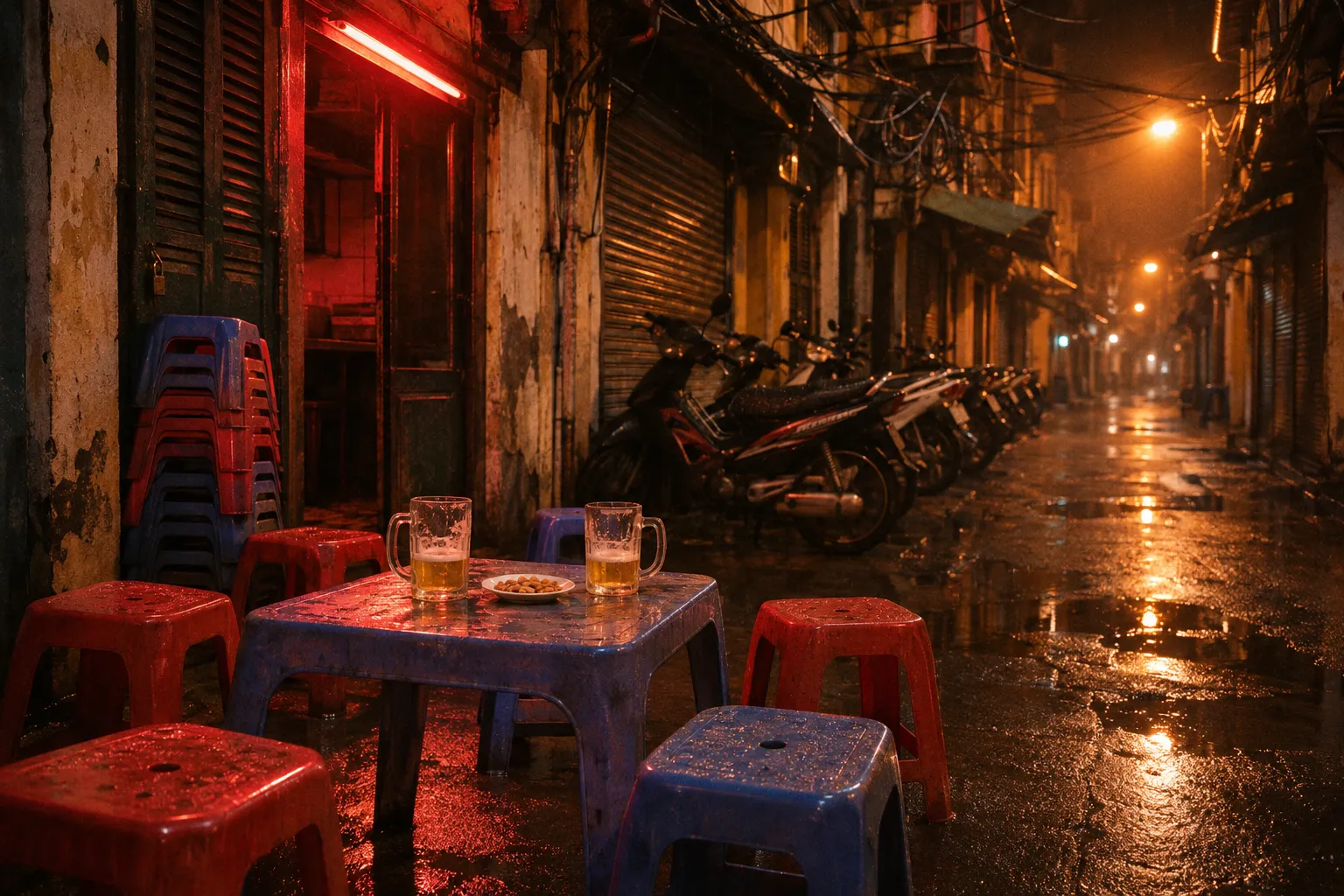
The Midnight Rule Shapes Every Evening
Hanoi closes earlier than the guides to Bangkok or Saigon had prepared me for. One tourism guide, updated in November 2026, says bars, beer stalls and karaoke rooms in the Old Quarter are expected to close at midnight, and that licensed nightclubs must stop by 2am. It adds that police patrol Ta Hien and the streets around it to keep venues to that hour.
I could not find the regulation itself, so I pass this on as a report and not as a law. What I can say is how it changes my plan, because I stop thinking about where to go after midnight and start thinking about what I want to have done by 11:30. The guide suggests ordering a last drink around then and paying before the street closes, which strikes me as sound advice for anyone who has watched a bill arrive in a hurry.
Ta Hien Is Two Streets Stacked On Top Of Each Other
Ta Hien is a short alley in the Old Quarter, and by about 8pm it is covered in plastic stools, portable kegs and people holding glasses of bia hoi. The guide describes two layers on the same street. The lower one is the fresh draft beer itself, and the upper one is the cocktail bars, shisha lounges and live music rooms that grew on top of it.
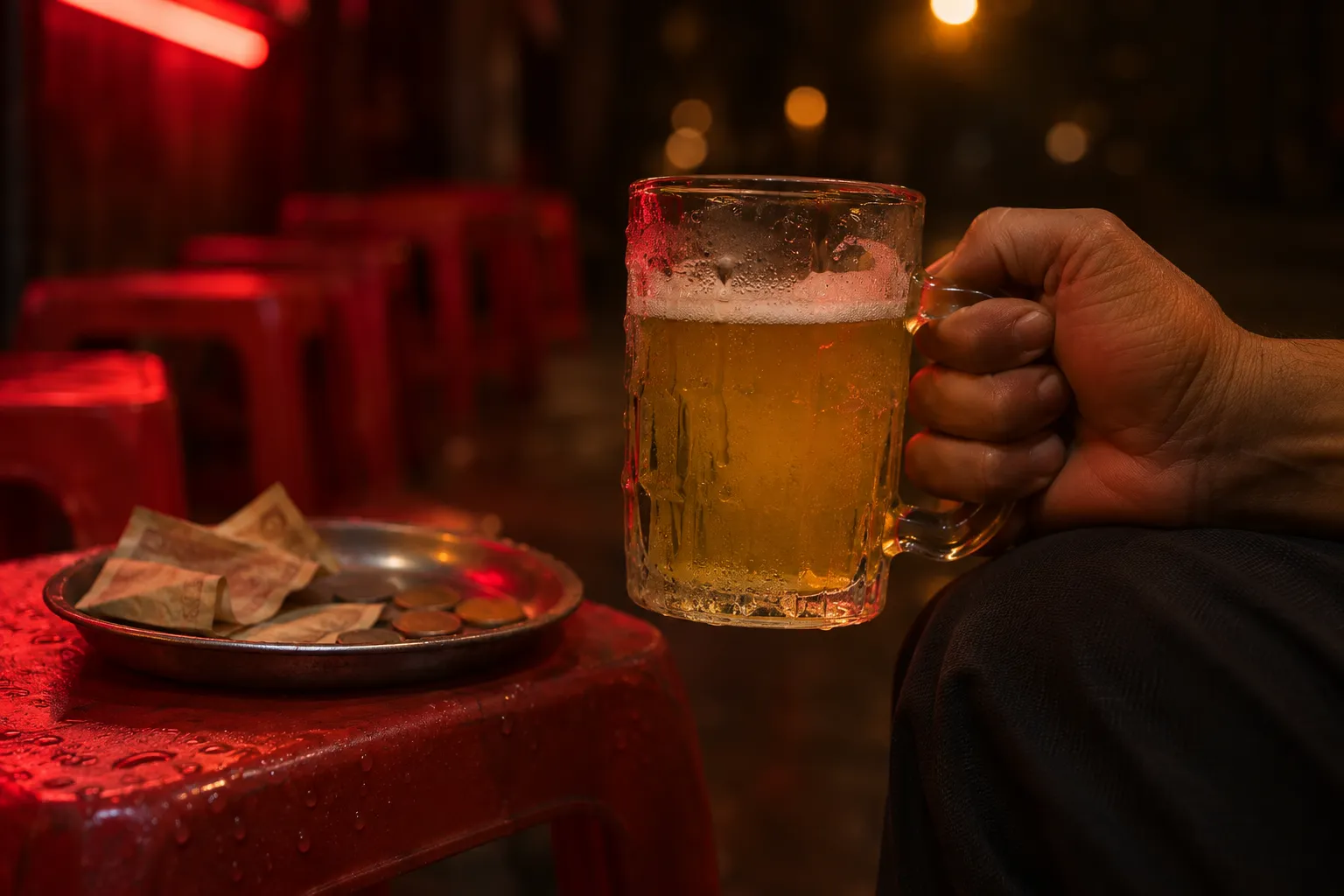
I sit at the beer level. The guide puts a glass of bia hoi at 5,000 to 15,000 dong ($0.19 to $0.57) on the street corners, a bucket of five local beers at 100,000 to 150,000 dong ($3.80 to $5.70), and a cocktail in one of the upstairs bars at 120,000 to 180,000 dong ($4.56 to $6.83). I convert at about 26,335 dong to the US dollar, a rate I checked on the day I wrote this.
The spread between those numbers is the whole lesson of the street. A corner stool costs roughly a third of what the same evening costs one floor up, and the view of the street is better from the stool.
The Quieter Beer Corners Are Where The Conversation Is
Ta Hien is loud and mixed, a crowd of backpackers, teachers, students and tour groups, and I have found that it is a poor place to talk to anyone for longer than a minute. The same guide points to calmer corners. One cluster near St. Joseph’s Cathedral, around Ly Quoc Su and Nha Tho streets, is quoted at 7,000 to 10,000 dong ($0.27 to $0.38) a glass with a mostly local crowd.
Another is on Tran Nhat Duat street near the Long Bien Bridge, where the guide says a glass costs about 5,000 dong ($0.19) and the food is peanuts, dried squid and fried tofu. I have not drunk at every corner it lists, so I read these as leads and not as verified facts. They fit a pattern I trust, which is that the cheaper and plainer the stool, the more likely the person beside it is local and the more likely a conversation starts without effort.
The Weekend Walking Street Is A Market, Not A Bar Crawl
On Friday, Saturday and Sunday evenings the streets around the Old Quarter fill with a night market, and the car traffic is kept out. Several guides give the hours as roughly 6pm to midnight, although they disagree on the details, and one older source dates the pedestrian rule to 2016. I would check the current hours locally before building an evening around it.
I use the market as a walk, not as a destination for drinking. It is crowded and it is mostly stalls, and it puts me near Hoan Kiem Lake and Ta Hien without any commitment to a particular bar. If a rainy weekend ruins it, nothing else about the evening needs to change.
Cocktail Bars And Jazz Sit On The Same Clock
The cocktail scene is smaller and quieter than the beer scene, and it keeps the same hours. The guide lists the Press Club on Ly Thai To street at 180,000 to 250,000 dong ($6.83 to $9.49) a cocktail, closing at midnight. It also mentions small, dimly lit craft bars on Ngo Bao Khanh street, often without a sign, at 150,000 to 220,000 dong ($5.70 to $8.35), most of them shutting at midnight as well.
For music, the guide describes Binh Minh Jazz Club behind the Opera House, with live sets from about 9pm to around 11:30 and a cover of 100,000 to 150,000 dong ($3.80 to $5.70). I like a place where the music ends on a schedule, because it gives the night an edge that I do not have to negotiate with myself. If I want an evening with a start and a finish, jazz is the easiest one on the list.
The Clubs Live In Tay Ho And Run To 2am
Anything later than midnight happens in a licensed club, and the guide places the main ones in Tay Ho, along Xuan Dieu and Dang Thai Mai streets. It says they cater to expats, wealthy locals and visitors, and that entry is often free while drinks run 150,000 to 250,000 dong ($5.70 to $9.49). Smaller, rougher clubs sit on Ma May and Luong Ngoc Quyen streets in the Old Quarter.
The guide tells readers to check each venue’s posted hours, and I agree, because a licence is the only thing that separates a legal 2am from a door that is locked and quiet. A room that dims its lights and shuts its shutters while the music keeps going is operating on a different arrangement than the one on the sign. I would rather leave than find out which.
Meeting People Here Follows The Same Clock
The midnight rule affects how I meet people as much as where I drink. A short evening means a conversation has to start early, and the bia hoi corners are the one place where a plastic stool next to a stranger makes that easy. I covered a very different city layout in Hong Kong nightlife and the stairs up, and the wider question of how a foreigner gets noticed in dating in Asia as a Western man.
For the app side of Vietnam, I covered what Tinder asks of a foreigner there and the wider set of Vietnamese dating apps and the bar bill that follows. The other cities I have written up sit together under the nightlife tag.
What time do bars close in Hanoi?
Most bars and beer corners in the Old Quarter are reported to close at midnight, and licensed nightclubs at 2am. I could not confirm the rule from an official source, so I plan for midnight.
How much does a night out in Hanoi cost?
The same guide gives 100,000 to 300,000 dong ($3.80 to $11.39) for a night of drinking on the beer street. Cocktail bars and clubs push that higher, at roughly 120,000 to 250,000 dong ($4.56 to $9.49) a drink.
Is Ta Hien worth visiting?
I go once, because it is the clearest picture of how the city drinks. After that I move to a quieter corner, where the beer costs less and the room is easier to talk in.
Is there nightlife in Hanoi after midnight?
Only in licensed clubs, mostly in Tay Ho, and only until 2am. Anything that stays open later in the Old Quarter is doing so quietly, and I leave.
The number I take out of Hanoi is not a price. It is 11:30, the time I now settle the bill before the stools start to move.