Tinder in Thailand let me message somebody within an hour of landing, with no identity document, no local SIM card and no verification screen holding the conversation shut. After Japan, where the app froze my chat until a passport scan cleared, the ease of it felt almost suspicious. The friction here is real enough, but it sits at the border and inside the profiles rather than inside the app. Nobody warned me about that, so I spent my first week solving a problem that didn’t exist.
Thailand Asks The App For Nothing
Thailand has no law forcing a dating app to check your age before it will let you type, so Tinder behaves here the way it behaves across most of the world. Japan is the outlier in this region rather than the rule. Tinder’s own help centre files its age verification article under Japan only, and the company has said that its wider ID verification stays voluntary unless local law requires otherwise, which is why the feature landed in the US, the UK, Brazil and Mexico as an option instead of a gate. The two days I lost photographing documents in Osaka are written up in Tinder in Japan, and none of that happened here. I installed the app in the taxi coming in from Suvarnabhumi and had two conversations running before I found my building.
That puts Thailand alongside Korea rather than Japan, and I wrote up the same surprise in Tinder in Korea, where the app opened instantly and the actual obstacle turned out to be the Korean apps I could never register for. Thailand doesn’t even do that to you. Thai people are on Tinder in real numbers, so there’s no locked domestic tier sitting behind a national identity check the way there is in Seoul. Whatever goes wrong for you here won’t be the registration, which is worth knowing before you waste a day on it like I did.
The Paperwork Moved To The Border
Everything Thailand wants from you happens before you land, on a form that didn’t exist a few years ago. Since 1 May 2025 every foreign national entering by land, air or sea has had to file a Thailand Digital Arrival Card, which replaced the paper TM6 that had been suspended since June 2022. You submit it at tdac.immigration.go.th no earlier than 72 hours before arrival, and you file a fresh one for every separate entry into the country.
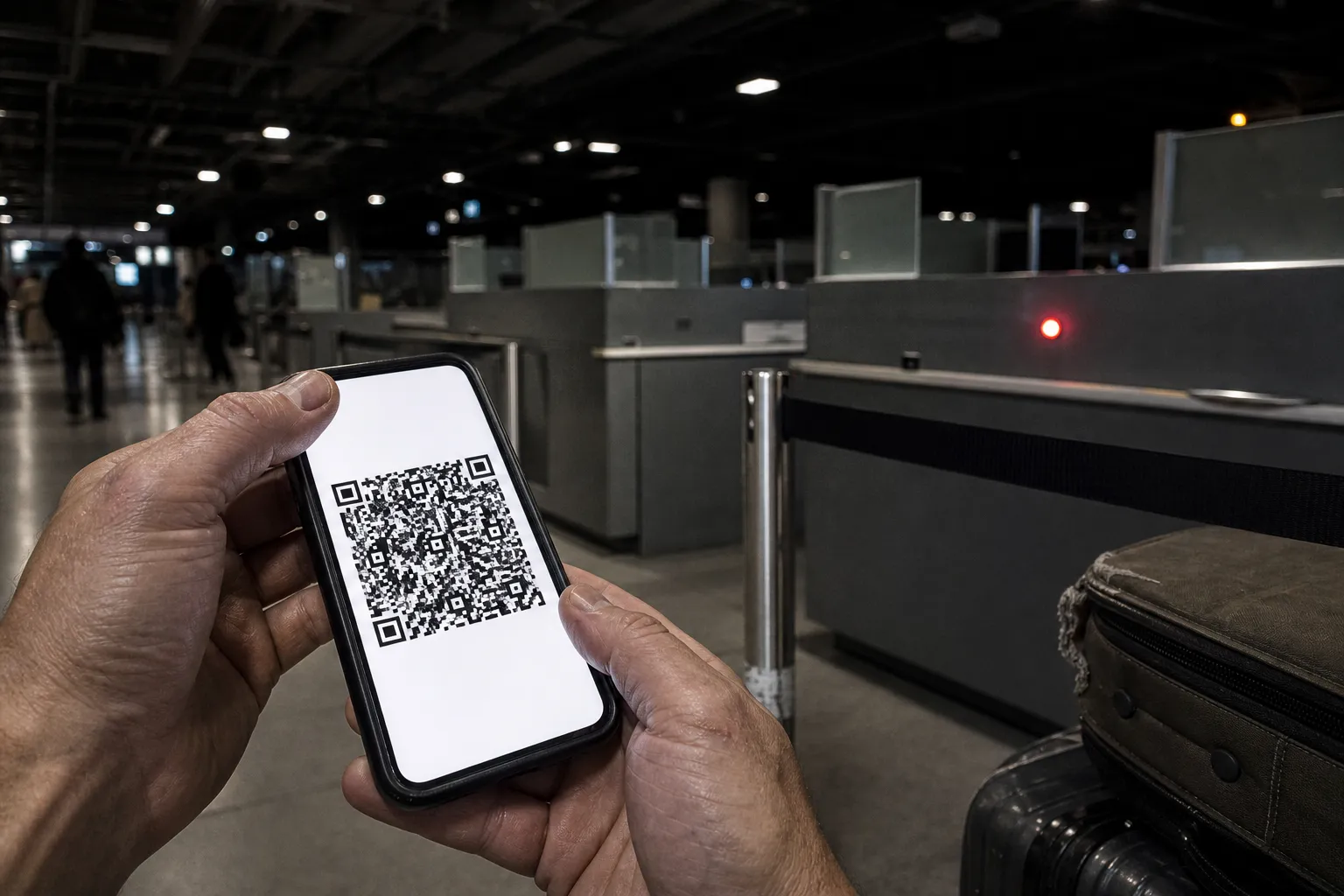
It costs nothing, and that matters because an industry of lookalike sites has grown around charging money for a free government form, which the Thai authorities have warned about in public. Miss the 72 hour window and there are self-service kiosks at Suvarnabhumi, Don Mueang, Phuket, Chiang Mai and Hat Yai, so the worst case is a longer queue rather than a refused entry. I filed mine from an airport lounge with about four hours to spare and it took under five minutes.
The other clock is the one that quietly decides whether a match is worth answering at all. Thailand’s visa exemption has been running at 60 days for the 93 eligible countries and territories, and the cabinet approved cutting that back to 30 days in May 2026, taking effect fifteen days after publication in the Royal Gazette. When I checked while writing this, publication still hadn’t been announced, so the 60 day rule was the one in force. I’m not going to pretend that is settled, and anybody reading this months from now should check the official position rather than trust my snapshot of it.
The Match Pool Changes By City, Not By App
The same app produced three completely different experiences depending on which part of Thailand I opened it in, and the difference was far larger than anything a setting could explain. Bangkok gave me volume and very little signal, a scroll that never ended and conversations that mostly evaporated after two exchanges. Chiang Mai was slower, smaller and considerably more human, with a visible population of people who lived there rather than passing through, and my only two decent conversations of the whole trip came out of it.
The islands were their own thing entirely, and closer to what the old travel essays describe. The pool there skews hard toward other visitors on a short clock, which produces a particular kind of conversation where both people are counting days without saying so. That is what the Salon essay from 2018 is really describing, and it holds up, but it covers about a fifth of the country. Anybody reading it as a guide to Bangkok is going to be confused when they arrive.
I’d say the useful move is to stop treating Tinder as one product with a national character. The app is a thin layer over whoever happens to be standing within a few kilometres of you, and in Thailand that population changes more between cities than it does between countries elsewhere in the region. I made the mistake of forming an opinion in Bangkok and carrying it north, which meant I nearly didn’t bother in Chiang Mai.
Some Profiles Are Working, And They Say So
A visible share of the profiles I saw in Bangkok were transactional, and most of them were reasonably direct about it once a conversation started. I’m not going to write a taxonomy of how to spot them, partly because it changes constantly and partly because that isn’t what this site is for. What I will say is that the signals were rarely subtle, and that the money question tended to surface early rather than as some elaborate ambush much later.
The part worth thinking about isn’t the existence of those profiles, which surprises nobody. It’s the effect they have on everyone else’s behaviour, including mine. Once you know a fraction of the pool is working, you start reading ordinary friendliness as a sales approach, and that suspicion leaks into conversations where it has no business being. I was noticeably worse company in Bangkok than in Chiang Mai, and I don’t think that was the city’s fault.
The other half of it is the honesty problem, which is that plenty of men arrive in Thailand telling themselves they want something the situation was never going to produce. The whole pattern of misreading attention as interest is one I went through properly in dating in Asia as a Western man, and Thailand is where that misreading gets its cheapest confirmation. Being liked here is easy and means almost nothing, which is not a comfortable thing to notice about yourself at a plastic table at one in the morning.
Tinder Still Won’t Quote Me A Price
Tinder doesn’t publish a subscription price for Thailand, or for anywhere else, because it generates pricing per account and tests it by location and by the platform you subscribe through. That was true when I looked at the Korean market and it’s true here, so I’m not going to give you a baht figure I can’t stand behind. Anybody who does publish one is quoting either their own receipt or a reseller’s asking price, and neither is what you’ll be charged.
I did pay for a month, and my honest reading is that it changed the volume rather than the outcome. Buying visibility inside a pool that isn’t producing what you want gets you more of the same pool, faster. That was the conclusion I reached about the premium tiers on Bumble as well, and nothing in Thailand argued me out of it. The one thing worth the money in Bangkok is a data SIM at the airport, because half the plans a match will propose depend on you being reachable while moving around.
What Three Weeks Actually Taught Me
I got two dates I’d repeat, both from Chiang Mai, and a fairly clear sense that the app had been the least interesting part of the trip. The conversations that went anywhere all moved to LINE within a few messages, which is the local default in the same way KakaoTalk is in Korea, and the mechanics of making that handoff without seeming either unsafe or overeager are the same everywhere in the region. I went through those properly in the note on what to do after you match.
If I went back tomorrow I’d file the arrival card, buy a SIM, and then spend my first three days somewhere other than Bangkok before forming any opinion about the app at all. The registration is free and instant here, which makes it very easy to mistake the app for the point. It took me most of the trip to work out that the constraint was never the software, and that the 60 days on my entry stamp were doing more to shape those conversations than anything I typed into them.
Does Tinder work in Thailand?
Tinder works normally in Thailand and doesn’t hold your messages behind an ID upload, unlike in Japan. Coverage is heavy in Bangkok, decent in Chiang Mai, Phuket and Pattaya, and thin in smaller towns.
Do I need a Thai phone number to use Tinder in Thailand?
No, Tinder runs fine on a foreign number or a tourist data SIM, and no Thai domestic dating app blocks visitors the way the Korean ones do. A local data SIM is still worth buying for the practical reason that plans get rearranged by message.
Is Tinder popular in Thailand?
Tinder carries a large and genuinely mixed user base in Thailand, including Thai users rather than only visitors, which sets it apart from the foreigner-heavy pool I found in Seoul. The composition varies sharply between Bangkok, the northern cities and the islands.
What paperwork do I need before arriving in Thailand?
Every foreign national has to file a free Thailand Digital Arrival Card at tdac.immigration.go.th within 72 hours of arrival, for every entry, and it replaced the old paper TM6 form on 1 May 2025. Kiosks at five airports cover you if you forget.
How long can I stay in Thailand on a visa exemption?
The exemption was still running at 60 days for the 93 eligible countries when I checked during this run, with an approved reduction to 30 days waiting on publication in the Royal Gazette. Check the current official position before you book anything around it.