Kabukicho sits about four minutes on foot from the east exit of Shinjuku Station, and almost nothing that goes wrong there involves anybody being hurt. What goes wrong is the bill, and it goes wrong out on the pavement, in the ten seconds when a stranger says a number and you decide to believe him. I’ve walked the district sober in the afternoon and I’ve walked it at two in the morning, and it reads as two different places depending on whether I arrived with a plan or arrived with somebody holding a laminated menu.
Kabukicho Is Four Minutes From the Station and Mostly Vertical
The district is small enough to cross on foot in about ten minutes and dense enough that ten minutes is never what it actually takes. Almost everything at street level is ordinary and cheap: ramen counters, izakaya, karaoke chains, pachinko halls, a drugstore, three convenience stores within sight of each other. The money all lives upstairs instead, and every building carries a column of backlit plates beside the lift, one plate per floor, each carrying a name and a phone number and no price anywhere on it.
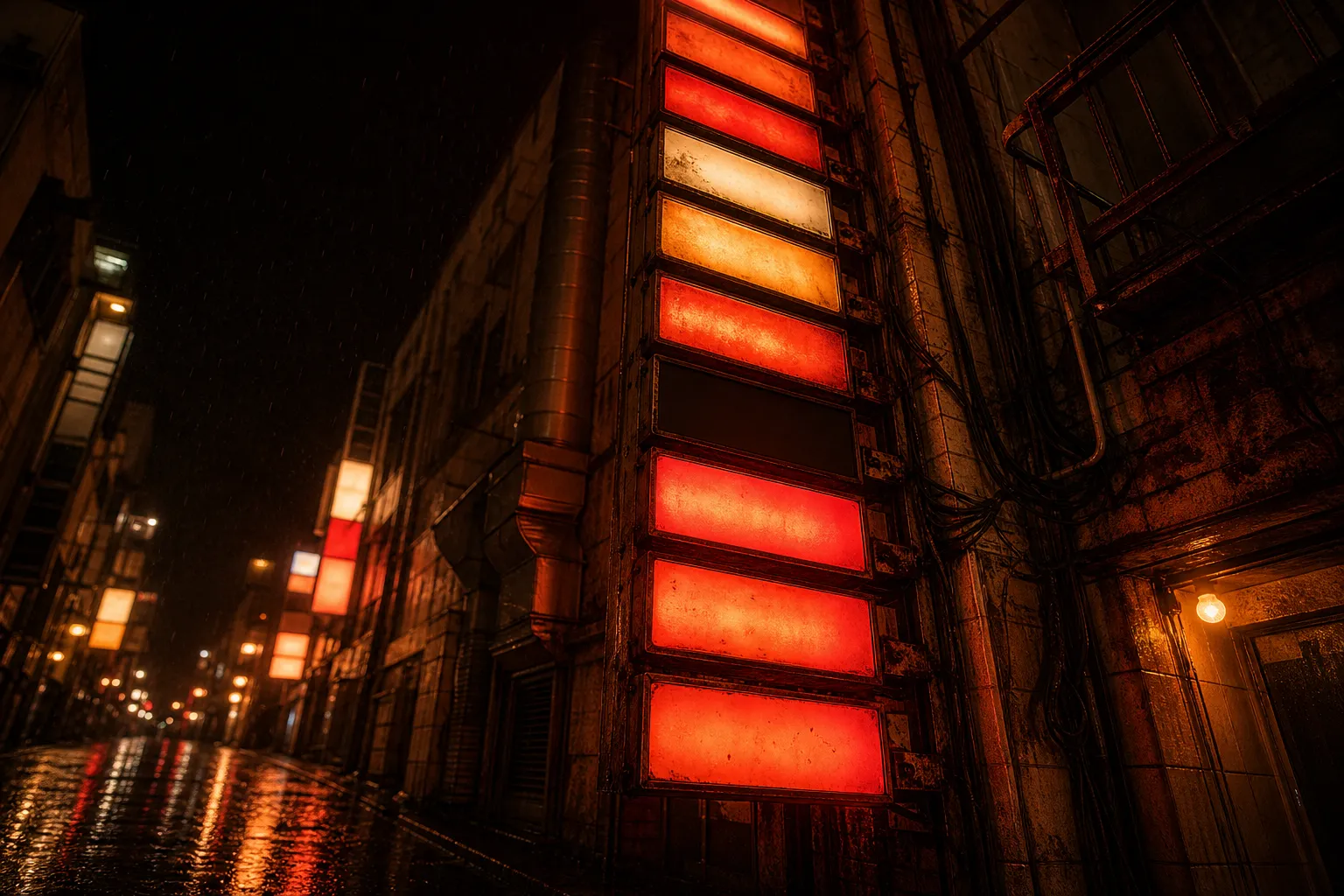
That vertical arrangement is the entire problem compressed into one image. A bar you can’t see into is a bar whose terms you can’t read from the street, so the only person offering to explain them is the one being paid to bring you upstairs. Two street names turn up in every safety write-up about the district, Okubo Park and Shokuan-dori, and both sit along the northern edge rather than in the middle of it. Golden Gai is a couple of minutes east and gets folded into the same conversation, though it works differently, being a warren of tiny bars where the seat charge is usually painted on the door in English before you touch the handle.
The Touts Are the Business Model Rather Than a Nuisance
Street touting is illegal in Tokyo under a local ordinance, and the written penalties are not symbolic in the slightest. The Japanese word is kyakuhiki, an individual can be fined up to 500,000 yen ($3,251), a business owner who puts touts to work can be fined up to 1,000,000 yen ($6,501), and a jail term of up to six months sits on the books alongside both. You would never guess any of that from twenty minutes on the street, because enforcement is thin and the men work in the open under the lights. Unseen Japan puts their commission at ten to twenty percent of whatever you eventually spend, which explains why the pitch is warm and the walk to the lift is brisk.
I get approached more often than the Japanese men walking a metre away from me, and that isn’t a grievance so much as a description of the arithmetic. A foreigner is worth more per head because he can’t read the plate, won’t cite the ordinance, and isn’t coming back next week to make a scene in front of regulars. Reporting on the police figures puts complaints involving foreign solicitors across Tokyo’s nightlife districts above 400 in 2024, with damages over 200 million yen, roughly $1.3 million. The tout isn’t a stray irritation at the edge of the district’s economy, and treating him as one is the mistake that costs money.
A Padded Bill Is Assembled From Charges You Technically Agreed To
The trick almost never involves a fake number, and that’s why it works on people who consider themselves careful. It involves a real number that quietly covers less than you assumed it did. One group in Ikebukuro was quoted 1,980 yen ($12.87) for 120 minutes of all-you-can-drink with a 420 yen table charge, and walked out having paid 11,830 yen ($76.91). A group in Kabukicho found an extra 6,000 yen ($39.01) of fees nobody had mentioned. Another was promised a 3,500 yen ($22.75) meal and settled at 15,000 yen ($97.52).
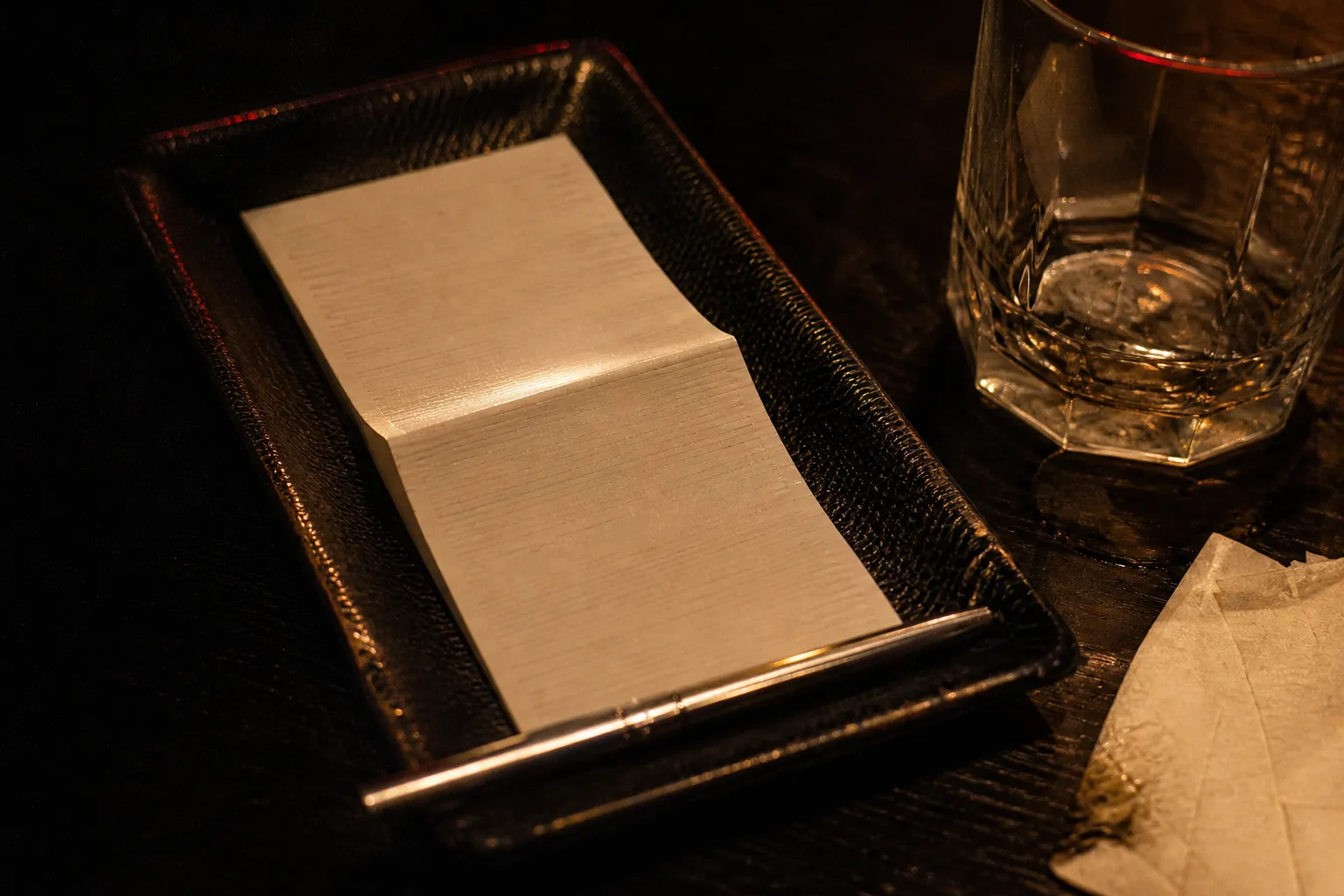
Every one of those additions has a name, and every name is perfectly ordinary somewhere else in Japan. There’s a seating charge around 1,500 yen ($9.75), a snack charge of 1,650 yen ($10.73) for the small dish you didn’t order and couldn’t decline, a weekend surcharge of another 1,500 yen, and a ten percent service fee calculated on the whole stack instead of on the drinks alone. Anybody who has paid a set charge in a kyabakura or settled a bottle-keep tab in a snack bar recognises that grammar on sight, because those places charge the same way and simply tell you first. What changes in a rip-off house is the sequence: the terms surface after you’re seated, in a room you would have to leave past the man who walked you in.
The famous cases make the news and then mislead everybody about the ordinary ones. A Shinjuku club advertising 5,000 yen an hour produced a bill of 1,108,200 yen for three hours of service back in 2015, and its staff were charged under the Tokyo ordinance covering overcharging. Hardly anyone experiences anything close to that. Police figures put total Kabukicho overcharging losses between January and October 2024 at roughly 140 million yen, about $910,000, and that sum is mostly made of people paying an unexpected forty dollars and deciding the argument isn’t worth their evening. The district runs on that decision being made thousands of times a month.
The Crime Here Is Almost Entirely About Property
Shinjuku ward logged 5,537 recognised crimes in 2023, and Kabukicho’s two chome rank second and third among the highest-crime areas across Tokyo’s twenty-three wards, which sounds alarming until you look at what the crimes actually are. In 2024, violent offences accounted for 145 incidents in Kabukicho 1-chome, or 17.3 percent of the total, while theft, fraud and property offences made up the remaining 694 incidents at 82.7 percent. Overcharging itself is handled as an ordinance violation rather than a penal-code offence, and it only escalates into something criminal when coercion enters the room.
So the honest answer to whether the place is safe depends on which risk you meant. I’ve never felt physically at risk in Kabukicho at any hour, including the dead stretch after the last train when the crowd thins to touts, drunks and people waiting for something. My wallet has felt at risk constantly, and that’s the correct instinct to bring. The district isn’t dangerous in the way a nervous first-time visitor imagines, and it’s more expensive than a confident one expects.
Tobita Shinchi Posts Its Prices and Kabukicho Never Will
The comparison that clarified Kabukicho for me was Tobita Shinchi in Osaka, where the entire commercial arrangement is visible from the street and the numbers are fixed, posted and identical from house to house. Nobody there negotiates, nobody is upsold, and a visitor who can’t read a word of Japanese still knows what a given block of time costs before committing to anything. That transparency isn’t a moral quality of the place, it’s just how that particular market is organised.
Kabukicho is organised the opposite way and profits from the difference. Ambiguity at the door is the margin, and any venue that resolves the ambiguity before you sit down is voluntarily giving that margin up. Plenty of them do, which is the part the scare articles undersell. The chain izakaya, the karaoke floors, the love hotels with their rate boards lit up in the lobby, and most of the ramen and yakitori in the district all price themselves openly and take your money without any theatre at all.
What I Ask Before I Sit Down Anywhere Here
I ask for the seat charge and the time block out loud, in that order, before my coat comes off. Those two numbers determine most of a Japanese nightlife bill, and a venue that answers them plainly is almost never the venue that ruins your night. When the answer arrives as reassurance instead of a figure, or as a gesture toward a menu somebody will bring over shortly, I’ve already learnt what I needed and the walk back to the street is short.
The other habit I keep is refusing to be walked anywhere. Being escorted through a door removes the moment where you’d normally read the sign, check the floor, and notice that the lift is going somewhere you can’t see. I pick the building first and arrive at it alone, which sounds obvious written down and is remarkably easy to abandon at one in the morning when somebody friendly is already three steps ahead of you and talking.
Is Kabukicho safe to walk at night?
Physically, yes, in the sense that violent crime is a small minority of what gets recorded there. The recorded risk is overwhelmingly financial rather than physical, so the sensible caution is about what you agree to pay rather than about where you walk.
What happens if I’m already looking at a padded bill?
The Japanese police emergency number is 110, and the JNTO travel hotline runs on 050-3816-2787 for visitors who need help in English. Refusing to pay inside the venue is how situations escalate from an ordinance matter into coercion, which is the one scenario worth avoiding at real cost.
Are all the touts running a scam?
No, and pretending otherwise makes you easier to work rather than harder. Some are pulling for ordinary bars that would have been fine, but you have no way to sort them on the pavement, so the cheap policy is declining all of them and losing nothing but a few decent bars.
How is this different from the rest of Tokyo nightlife?
Most of Tokyo prices itself openly and Kabukicho contains a concentrated minority of venues that don’t. Shibuya and Roppongi have their own versions of the same trade, though the density of touts per block in Kabukicho is what makes it the district everybody warns about.
Do I need Japanese to handle the district?
Not for the ordinary places, where the menus carry pictures and the rate boards carry numbers. The venues where language would genuinely protect you are precisely the venues that were never going to make their terms legible anyway, so the useful skill is leaving rather than translating.
A district that takes an extra forty dollars off thousands of visitors a month, quietly and legally enough to stay open, has found something far more durable than a scam. It’s found a price for not reading the sign, and most of us pay it once and call it research.