Golden Gai is a block of six narrow alleys a few minutes on foot from the east exit of Shinjuku Station, packed with somewhere between 200 and 280 bars that mostly seat five or six people each. A night there is built from a seat charge of ¥500 to ¥1,500 ($3 to $10) at every bar you enter, plus drinks from roughly ¥700 ($5), and the charge is usually written on the door before you touch the handle. I keep going back because it’s the one corner of Kabukicho where the price reaches me before the stool does, and the cost of that honesty is that plenty of the doors were never meant for me.
Golden Gai Is Six Alleys and Nobody Agrees on the Count
The district is a tight grid of six lanes joined by passages barely wider than my shoulders, lined with two-storey wooden buildings that each hold a bar downstairs and another one up a ladder of a staircase. GO TOKYO, the city’s own tourism site, puts the number at around 280 bars and says many of them seat only five or six patrons at a time. Wikipedia says over 200, several English-language guides say roughly 200, and a writer who spent real time behind one of the counters guessed anywhere from 100 to 200. I’ve never tried to count them myself, since half the doors are shut on any given night and the other half change their names more often than their stools.
The disagreement matters less than what the number describes, which is a few hundred businesses sharing a patch of land that a wire service once measured at roughly 2,000 square metres. That density is the whole character of the place. Everything that makes Golden Gai pleasant and everything that makes it slightly awkward for a foreigner comes from the fact that each room is about the size of a train compartment and its owner has to make rent out of six people at a time.
The Seat Charge Is Rent on a Very Small Room
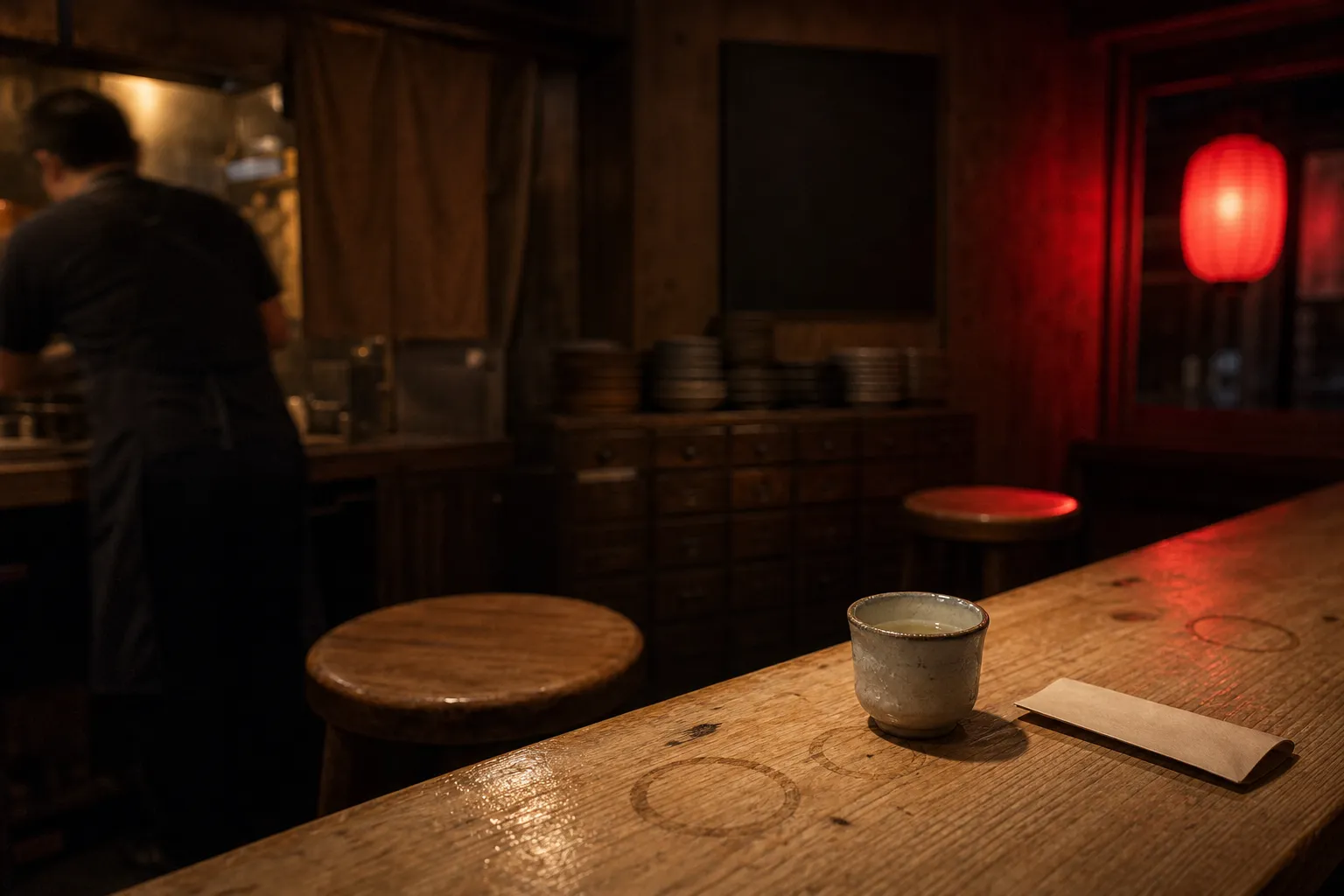
The seat charge exists because a stool in Golden Gai is scarce stock, and the owner is selling the use of it before selling anything poured into a glass. The range most guides give is ¥500 to ¥1,500 ($3 to $10) per person, sometimes with a small dish of snacks thrown in, and one first-timer’s write-up found most doors sitting between ¥700 and ¥1,000 ($5 to $7). Albatross, one of the better-known bars and unusually large at three storeys, lists a ¥500 ($3) table charge and opens from 7pm to 5am. A few places, Champion being the one everybody names, often charge nothing at the door at all.
I used to resent the charge in the way I resent any fee that arrives with no product attached. Golden Gai cured me of that faster than anywhere else in Japan, because the arithmetic is so visible from the stool. In a six-seat room, a tourist who sits for twenty minutes over one beer and then leaves to photograph the next alley has occupied a sixth of the bar’s capacity for a large slice of the evening. The charge is the owner’s way of making that tourist worth the seat, and it’s the same logic I wrote about with the set charge in a snack bar, only posted outside where I can read it.
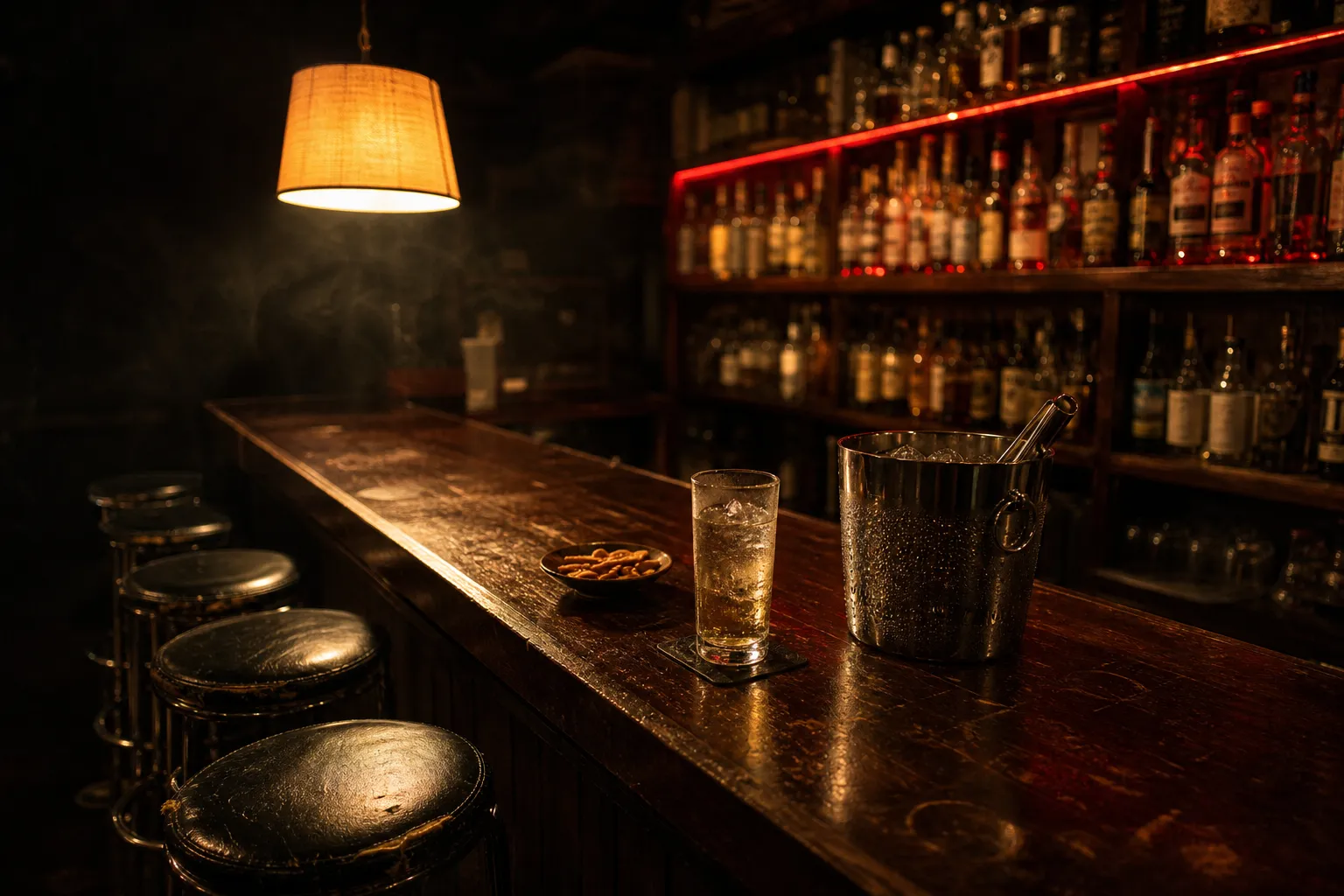
Drinks run about ¥700 to ¥1,000 ($5 to $7) for a beer and ¥800 to ¥1,500 ($5 to $10) or more for whisky and cocktails, according to a 2026 guide that tracks the district’s prices. Those numbers aren’t cheap by Tokyo standards, and they aren’t a trap either. They’re simply what a drink costs in a room where the bartender is also the landlord, the cleaner, the DJ and frequently the only other person there.
The Door Tells Me Everything Before I Open It
Golden Gai sorts its customers with paper taped to the door, and reading those signs is the only real skill the district asks of me. Some say tourists are welcome, some say regulars only, some say no photographs, some say cash only, and a few advertise that there’s no charge for travellers at all. GO TOKYO states plainly that some bars are for members only while others are open to everyone, and I’ve learned to treat a door with nothing written on it in English as a door that would rather I didn’t try.
This is the part the scare articles about the neighbourhood miss completely. Two minutes west in Kabukicho, the price is hidden upstairs behind a tout and a lift, and the entire business model depends on me not knowing the terms until I’m seated. In Golden Gai the terms are posted at knee height in marker pen, and the worst thing that happens to a stranger is a polite shake of the head from behind the counter. I’ll take the refusal every time, because it costs nothing and it’s honest about what the room is for.
Getting turned away still stings slightly, and I don’t think that feeling is worth pretending away. On one early visit I slid a door open onto four men mid-story, the bartender looked up, and the silence told me the answer before she did. She wasn’t being hostile to foreigners so much as protecting four regulars who’d paid for that room with twenty years of Thursdays. The same small calculation decides who gets a stool in a kyabakura or a snack across town, only there it’s hidden behind a menu and here it’s visible on a face.
A Full Night Costs More Than Anyone Budgets
A realistic night of two or three bars in Golden Gai comes to about ¥5,000 to ¥10,000 ($33 to $65) or more, and the seat charges are why the total always climbs faster than the drinks suggest. Every new door restarts the meter. A single beer in each of three bars at ¥1,000 charges plus ¥800 drinks is already ¥5,400 ($35), and nobody I’ve ever gone with has stopped at one drink or three bars.
The bar-hopping habit that every travel article recommends is the most expensive way to use the place. I spent my first visit moving every half hour because I thought variety was the point, and I paid four seat charges to have four short, shallow conversations. The better nights have been the ones where I found a bar with a decent bartender and a record collection I liked, paid the charge once, and stayed until the regulars started talking to me instead of around me. Most bars open around 8pm, the district is busiest from about 10pm to 1am, and closing time is set bar by bar, usually somewhere between 2am and 5am.
All conversions in this piece use ¥153.6 to the dollar, the rate on the morning I wrote it, and cash still matters here far more than it does in the rest of Tokyo. Several doors say so in writing, and I’ve watched a card get handed back across a counter with an apologetic smile more than once.
The Camera Is the Fastest Way to Get Disliked
Photography in Golden Gai is restricted on the streets themselves, not just inside the bars, because the alleys are private land. The shopping street association that manages the district says on its official site that all the streets are private roads and that filming or photographing them requires permission, and Wikipedia repeats that rule for any purpose. Plenty of bars add their own no-photos sign on top, which covers the interiors and the people drinking in them.
I understand why visitors ignore it, since the alleys look exactly like every photograph that brought them there. The effect from inside a bar is a steady stream of phone screens pointed through the gap in the curtain at people who came out to drink somewhere unobserved. Every raised phone makes the next foreigner at the door slightly less welcome, which is a cost I’d rather not pass on to whoever arrives after me.
It Survived Developers and a Fire by Staying Small
Golden Gai exists at all because it refused to become valuable. It was known for prostitution until 1958, when that became illegal, and afterwards it turned into a drinking district, with some bars tracing their roots back to the 1960s. In the 1980s, when buildings across Tokyo were being set alight so developers could buy the land, supporters took turns guarding the alleys at night, and the district came through intact.
The fire that did reach it came on 12 April 2016, starting at around 1:20 in the afternoon and gutting four wooden buildings that held six businesses. It took 40 fire trucks and a helicopter to put out, and two people were slightly hurt. The bars rebuilt in the same shape, which tells me more about the district than any guidebook line about atmosphere. The owners weren’t preserving a tourist attraction, they were rebuilding rooms that only work because they’re too small to be anything else.
How much is the cover charge in Golden Gai?
Most bars charge ¥500 to ¥1,500 ($3 to $10) per person just to sit down, and a handful charge nothing. The figure is usually written on the door, often in English, and I’ve never had one change between the sign and the bill.
Are Golden Gai bars welcoming to foreigners?
Many are, and they say so on signs outside, while some are regulars-only and will turn a stranger away. Reading the door first and leaving without fuss when refused has always been enough for me.
Can I take photos in Golden Gai?
Not freely, since the alleys are private property and the managing association requires permission to film or photograph them. Inside, I ask the bartender before lifting a phone, and the answer is usually no.
What time do Golden Gai bars open?
Most open around 8pm and close between 2am and 5am, with each bar setting its own hours. Going early gives me the best chance of a free stool and a bartender with time to talk.
The whole district amounts to a few hundred people agreeing to tell strangers the price up front and keep the right to say no, and after years of drinking in rooms that hid one or the other from me, that combination still feels like a kindness.