Nomihodai means all you can drink, and in practice it’s a flat fee for a fixed stretch of time, usually ninety or a hundred and twenty minutes, taken off a drink list the house has chosen rather than the full menu. Whether it’s worth taking comes down to arithmetic, and at the prices the big chains charge right now that line sits somewhere around the third glass. Under three drinks I’m paying for rounds I was never going to order, and over three the house is pouring at a loss it priced in long before I sat down. I’ve landed on the wrong side of that line more often than I’d like to write down.
Nomihodai Is Rented Time, Not Free Drinks
The fee buys a window, and what I do inside the window is my problem. Gurunavi, the booking site most izakaya chains list themselves on, showed 54,715 restaurants running some form of nomihodai on the morning I wrote this, and a separate 1,306 listed under tanpin nomihodai, the drink-only version that doesn’t force a food course on me as well. The listings print the shape of the deal in a shorthand worth learning, because 120分制 means a hundred and twenty minutes on a clock the staff start when the plan starts, not when I walked through the door.
Three-hour plans are common enough that I stopped treating them as unusual. One place near Nishiki in Nagoya advertises 180分制 as its standard, and the same listing was running a coupon that stretched the usual hundred and twenty minutes to a hundred and eighty while knocking ¥500 ($3.18) off the course price. The longer window sounds generous until I remember that nobody is obliged to keep drinking for three hours, and that the house has done this arithmetic far more times than I have.
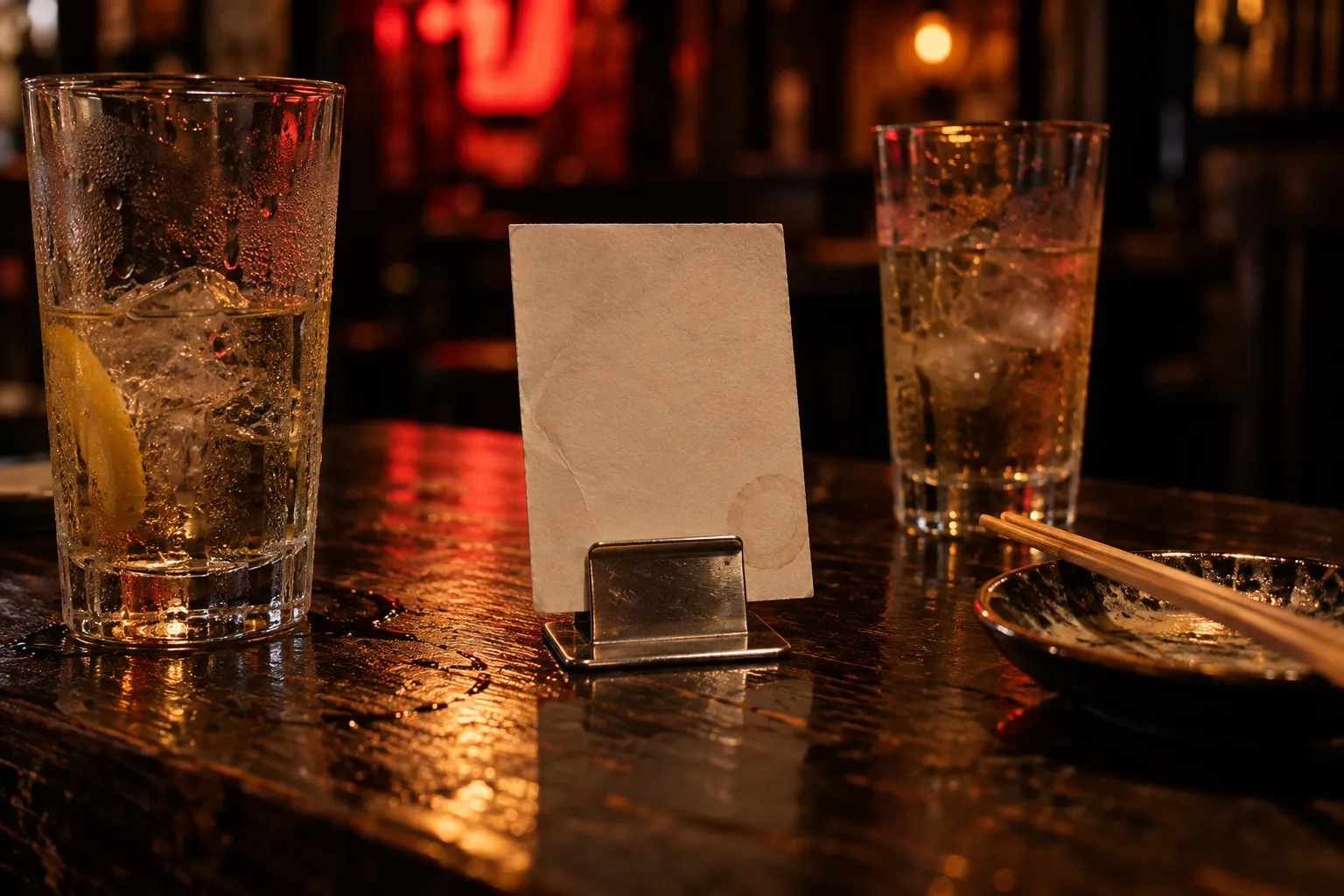
The Break-Even Sits Around the Third Drink
At what the chains charge for a single glass, a standard nomihodai pays for itself somewhere between the second and the fourth. Shirokiya and Warawara, the two big Monteroza izakaya brands, publish their current menu openly, and the September 2026 sheet prices a Dragon highball at ¥428 before tax and ¥471 with it ($2.99). A glass of Osumi shochu lands at the same ¥471, a tsukekomi sour at ¥493 ($3.13), and a Roku craft gin soda at ¥733 ($4.66). Those are the numbers the plan is quietly competing against.
Against them, the plans look like this. A place in Hachioji was selling a two-hour nomihodai at ¥1,999 ($12.70) and discounting it to ¥999 ($6.35) through the booking site, while another a few minutes from the same station offered three hours drink-only at ¥1,628 ($10.34) cut to ¥1,078 ($6.85). Divide the discounted ¥999 by a ¥471 highball and the plan breaks even at 2.1 drinks, so the third one is where I start winning. Take the undiscounted ¥1,628 and the same sum gives 3.5, which means the fourth glass is the one that settles it.
The arithmetic bends fast once I order anything better than a highball. At ¥733 for the Roku gin soda, a ¥999 plan is ahead before I’ve finished the second drink, which is exactly why the cheaper plans rarely include the good gin. All the conversions here use ¥157.41 to the dollar, the rate published on the morning I wrote this.
The Set Menu Is Where the Deal Gets Narrower
The drink list attached to the plan is not the drink list on the table, and the gap between them is where the house makes its money back. A cheap plan tends to cover draft beer, highballs, shochu, sours, house wine and soft drinks, which is a decent spread until I want the one thing I actually came in for. Premium plans exist and cost more, and the difference between the two tiers is usually a short list of bottles somebody in head office worked out I’d pay extra for.
Some places narrow it further and are honest about it. One listing I read was advertising a lemon sour nomihodai at ¥429 ($2.73), meaning unlimited lemon sours and nothing else, which is either a bargain or a punishment depending on how I feel about lemon sours. I’ve taken those deals and enjoyed them, though I’ve never once finished the night thinking I’d outsmarted anybody.
Last Order Comes Half an Hour Before the Clock Runs Out
The plans print it plainly as LO.30分前, and it changes the maths more than the headline time does. One Nagoya listing I read gave its terms as 120分制(LO.30分前), which means a two-hour plan is really ninety minutes of ordering followed by thirty minutes of drinking whatever is already in front of me. Staff come round near the cutoff and ask whether anyone wants a last round, and that question has separated me from my judgement on several occasions.
What it produces is a small stampede at the ninety-minute mark, where a table that was drinking comfortably suddenly orders two each because the window is closing. I’ve done it knowing exactly what I was doing. The plan is designed so that the last order lands while I’m still enjoying myself, and it works on me as reliably as it works on everybody else at the table.
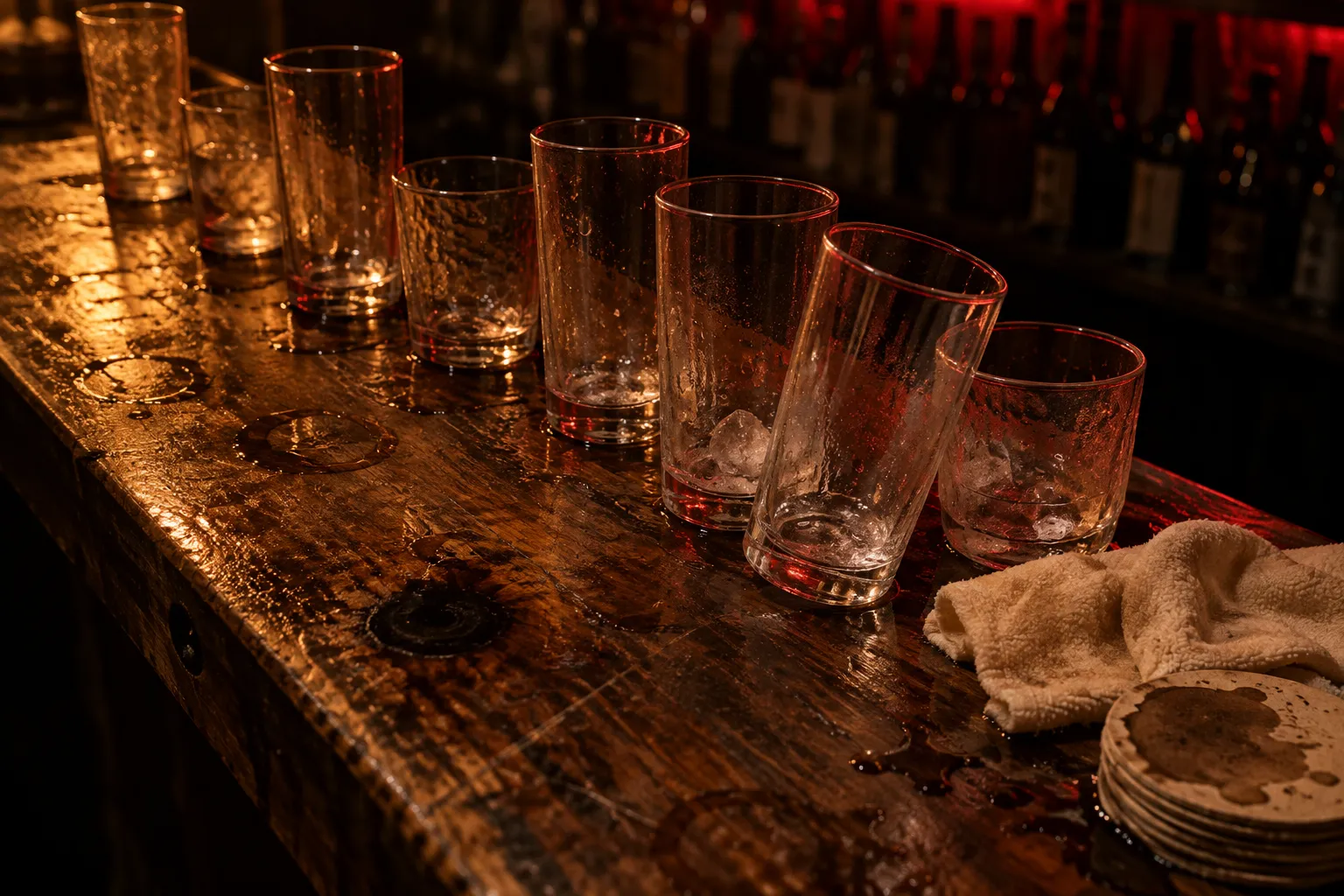
The Otoshi Still Lands on Top
A nomihodai fee doesn’t absorb the table charge, and I’ve watched people assume it does. The otoshi, the small dish that arrives before I’ve ordered anything, is billed per person at somewhere between ¥300 and ¥600 ($1.91 to $3.81) in most izakaya, and it sits on the receipt underneath the plan rather than inside it. For a table of six that’s a few thousand yen nobody budgeted for, added to a number everyone had already agreed was fixed.
Combined food and drink packages bury the charge instead of removing it. A Chinese izakaya in Kawaguchi advertises a hundred dishes with two hours of drinks at ¥3,278 ($20.83), a place in Kawagoe runs two hours of everything at ¥3,000 ($19.06), and a restaurant in Urawa lists ¥3,900 before tax, which arrives as ¥4,290 ($27.26). Those are clean numbers and I like them for that reason, because the whole evening resolves into a single figure I can decide about while sober.
The alternative I trust most is a bar that writes its charge on the door the way Golden Gai does, where the seat fee is in marker pen and nothing pretends to be free. Compare that with how the money goes wrong in Kabukicho, where the number is agreed on the pavement by somebody with an incentive to be vague, and the case for a printed plan gets easier to make.
The Clock Changes the Evening, Not Just the Bill
A deadline on the table makes me drink toward the deadline, which is the part the price comparison never captures. I’ve ordered a second drink before finishing the first purely because a waiter mentioned last order, and I’ve watched a good conversation get interrupted so that four people could place a defensive round. The plan turns the evening into a small project with a completion target, and I’m not convinced that’s what I came out for.
With a group of friends the effect is harmless and sometimes the whole point, since everyone is there to drink and the fixed price stops the bill becoming an argument. On a first date it does something I’ve learned to avoid, because the clock sets a pace neither of us chose and the sensible move, slowing down, starts to feel like wasting money. I’ve sat opposite someone perfectly pleasant while quietly doing sums, which is a poor way to spend an hour and an obvious one to the other person.
What I do now is take the plan when the night is already decided and skip it when the night is still being decided. A snack bar charges more per hour and paces me through the mama rather than through a timer, and that suits a conversation better than a hundred and twenty minutes of rented permission ever has.
Questions I Get About Nomihodai
Does everyone at the table have to take the plan?
Every place I’ve done it has applied the plan per person and asked how many people were joining before starting the clock, so I’ve always ended up in a table where everyone was on it. I’ve never tried to be the one person who opts out, which means I can’t tell you honestly what happens if you do.
Is nomihodai actually cheaper than paying per drink?
Past the third glass at standard chain prices it is, and below the third glass it isn’t. A discounted ¥999 plan against a ¥471 highball breaks even at 2.1 drinks, so two drinks means I’ve donated a few hundred yen to a company that expected exactly that.
What’s the difference between nomihodai and tabehodai?
Nomihodai covers drinks and tabehodai covers food, and the combined packages sold as tabe-nomihodai cover both for a single price. Those ran between ¥3,000 and ¥4,290 ($19.06 to $27.26) at the places I checked.
Can I take a drink plan without ordering a food course?
Yes, and it’s listed as tanpin nomihodai, with 1,306 restaurants offering it on Gurunavi when I looked. It’s the version I take most often, since it leaves what I eat as a separate decision from what I drink.
The three-drink line is easy to calculate and easy to ignore once the first one is in front of me, which is the honest reason I keep paying for plans I don’t finish. Knowing the number hasn’t stopped me taking the deal, though it has stopped me pretending afterwards that the deal was the reason.