Okinawa nightlife is mostly Naha, where Kokusai Dori is the long main street, Makishi is the market for cheap local drinking and Matsuyama is the district of hostess-style clubs. The second pocket is Chatan and Okinawa City on the central coast, which is where the American-base crowd drinks. I treat the island as one good evening in Naha plus a taxi problem, because the monorail stops before the night does.
Naha Is Where the Night Actually Happens
Almost everything a visitor needs is inside a few kilometres of Kokusai Dori, and I would not base a nightlife trip anywhere else on the island. The street is the spine, and the covered arcades Heiwa Dori and Ichiba Hondori run off it, so rain does not cancel anything. One local tour company lists shops closing around 22:00, restaurants staying open to 23:00 or midnight and bars running to 2am or later.
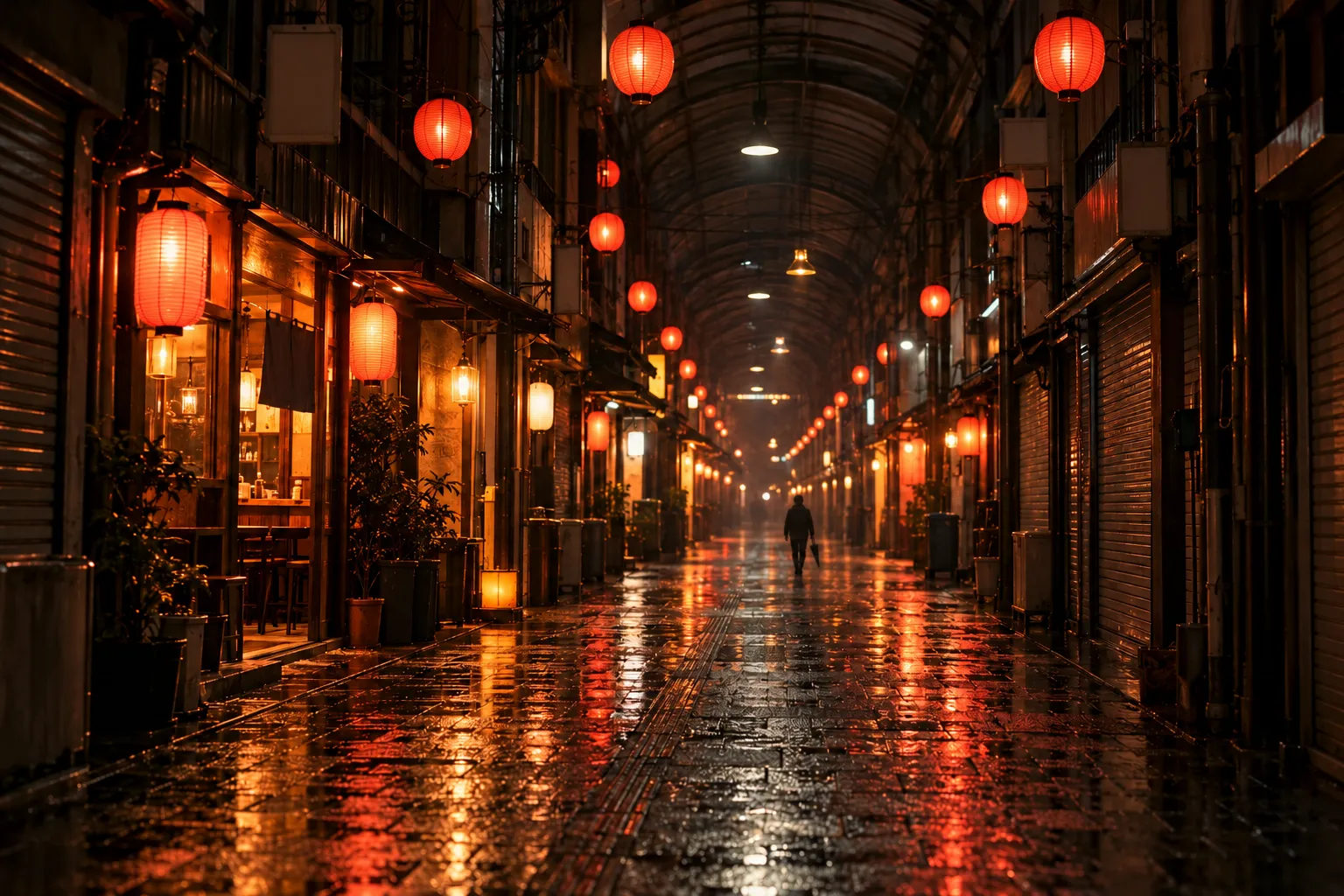
The practical rhythm is dinner on or near Kokusai Dori and then a move to a smaller room after the shops shut. I find that the street itself gets less interesting after about 10pm, and the better rooms are one or two turns away from it, up a staircase or behind a door with a handwritten sign.
Makishi Is for Cheap Awamori and Standing Bars
Makishi is the market district beside Kokusai Dori, and it is where I would start if the goal were drinking with locals rather than being looked after. The stalls in Makishi Public Market close around 22:00, but the awamori bar in the basement is reported to be cheaper and rowdier than the tourist places upstairs. Awamori is the local spirit made from rice, and a tasting flight at one specialist bar starts from about 1,500 yen ($9.47).
The small standing bars around the market and the neighbouring Sakaemachi market make it easy to hop between spots without committing to a table. That matters to me because a table brings a seat charge, which I wrote about in the otoshi post, and a standing bar usually shows the price before I lean on anything.
Matsuyama Is the Hostess District and It Is Selective
Matsuyama is Naha’s hostess and club district, and I treat it the way I treat Osaka’s equivalent: a place that sells company by the hour at prices that are fixed by the house rather than the menu. A local guide notes that some hostess-style clubs there may decline customers who do not speak Japanese, which is a business choice about who can follow the rules of the room rather than a personal insult.
I explained how those rooms charge in the kyabakura post and the snack bar post, and the arithmetic is the same in Naha. A quoted hourly price grows once the seat charge, service charge and drinks go on top, and a street tout who promises otherwise is the usual way a visitor ends up with a bill much larger than the quote. I have no reason to think Matsuyama is different, so I pick my own door or I skip it. Lighter options in the same district include cover-charge bars, and one venue there lists a cover of about 2,000 to 3,000 yen ($12.63 to $18.95) with a drink included.
Live Music and Sakurazaka Are the Quieter Answer
If the goal is an evening rather than a bill, the live music rooms and the small bars of Sakurazaka are the better bet. A folk music venue on Kokusai Dori runs four sets between 18:30 and 21:30 and charges about 3,500 to 5,000 yen ($22.11 to $31.58) per person including a music charge. A jazz club runs two sets a night from Tuesday to Sunday with a music charge of 1,500 to 2,500 yen ($9.47 to $15.79) plus a one-drink minimum, and it asks for a reservation on weekends.
Sakurazaka has a handful of small bars, and one of them lists cocktails at about 1,200 yen ($7.58) with no cover, which is the cheapest honest number I found for a sit-down drink. It is also the easiest place to have a conversation, and I would pick it for a first meeting after matching on Tinder in Japan, since it is public, quiet and over by a sensible hour.
Chatan and Koza Belong to the Bases
Chatan and Okinawa City are on the central coast, away from Naha, and they carry the American presence in a way the capital does not. American Village in Chatan has restaurants and bars that stay open to roughly 23:00 or midnight, while its shops close around 21:00. A brewery there lists pints at about 800 yen ($5.05). Koza in Okinawa City is better known as a music town, and Gate 2 Street is the live-bar strip that Naha city has cited as the kind of nightlife district it does not have.
Neither is on the monorail, so they are a bus-or-taxi decision, and the buses toward Chatan mostly stop around 21:00 to 22:00 according to one guide. I would go there for a specific band or a specific bar and take a taxi home, rather than wander.
The U.S. military’s own rules shape these areas as well. The American forces on Okinawa have used curfews before, and in October 2026 U.S. forces announced a 30-day curfew from midnight to 5am that follows a 48-hour operational pause. That affects how the base-side bars feel late at night, and it is temporary, so I would check the current status before building a plan around it.
The Monorail Decides the Night
The Yui Rail monorail is the cheapest way along the Naha spine, and the last departure from the airport end is about 11:30pm. Sources put the service at roughly 06:00 to 23:30, and I check the official timetable on the day because that can change. A fare for a short hop is about 230 yen ($1.45), and Makishi is the closest station to Kokusai Dori.
After the monorail stops, the choice is a taxi or a late bar that lets me wait until morning. One guide lists a 20% taxi surcharge between 22:00 and 05:00, and the starting fare is around 600 yen ($3.79), so a short ride in Naha is still cheap. A ride out to Chatan is the expensive version, which is why I do not stay out there past the last bus without a plan.
What Okinawa Does Better and Worse Than Tokyo
Okinawa is gentler and smaller than the mainland cities, and it is worse if what I want is a night that runs past 3am in many directions. Naha gives me a handful of walkable streets, a clear local drink and a slower pace, but it has nothing like the choice of Shibuya or Osaka. I would also drop the idea of a quick tour of everything, because each pocket is far enough from the next to need a car or a taxi.
For a group evening with free-pour drinks I would look at nomihodai first, since the time limit shapes the whole evening, and I would read the small print before the menu.
What is the best area for nightlife in Okinawa?
Naha, around Kokusai Dori and Makishi, is the best base because the bars, the market and the monorail are all within walking distance. Chatan and Koza suit people who want the American-influenced bars and live music.
Is Okinawa nightlife good for foreigners?
Most bars and izakaya are easy to enter, while some hostess-style clubs in Matsuyama may decline people who do not speak Japanese. I stick to places that post a price.
What time does the monorail stop in Naha?
The last departure from the airport end is reported as about 11:30pm. Timetables change, so I check the official one on the day.
Is it safe to go out in Naha at night?
I treat it like any Japanese city, with the main risk being an expensive bar chosen by a tout. Walking past anyone who offers a table solves most of it.