Osaka nightlife is best at the edges of the famous parts, and that is where I end up most nights. Dotonbori is worth walking once for the signs, but the evenings I remember happened in an alley, at a standing counter or over a tray of fried skewers a few streets away. The city is also looser than Tokyo about how an evening is supposed to go, which suits me, though it asks me to watch the clock and the door more than the district’s reputation suggests.
Dotonbori Is for Walking, Not for Staying
Dotonbori is the canal strip of neon and food stalls that every visitor photographs, and I treat it as a corridor rather than a destination. The signs are the attraction, the crowd is thick until late, and the sensible plan is to walk the length of it, eat something from a stall and carry on into the side streets.
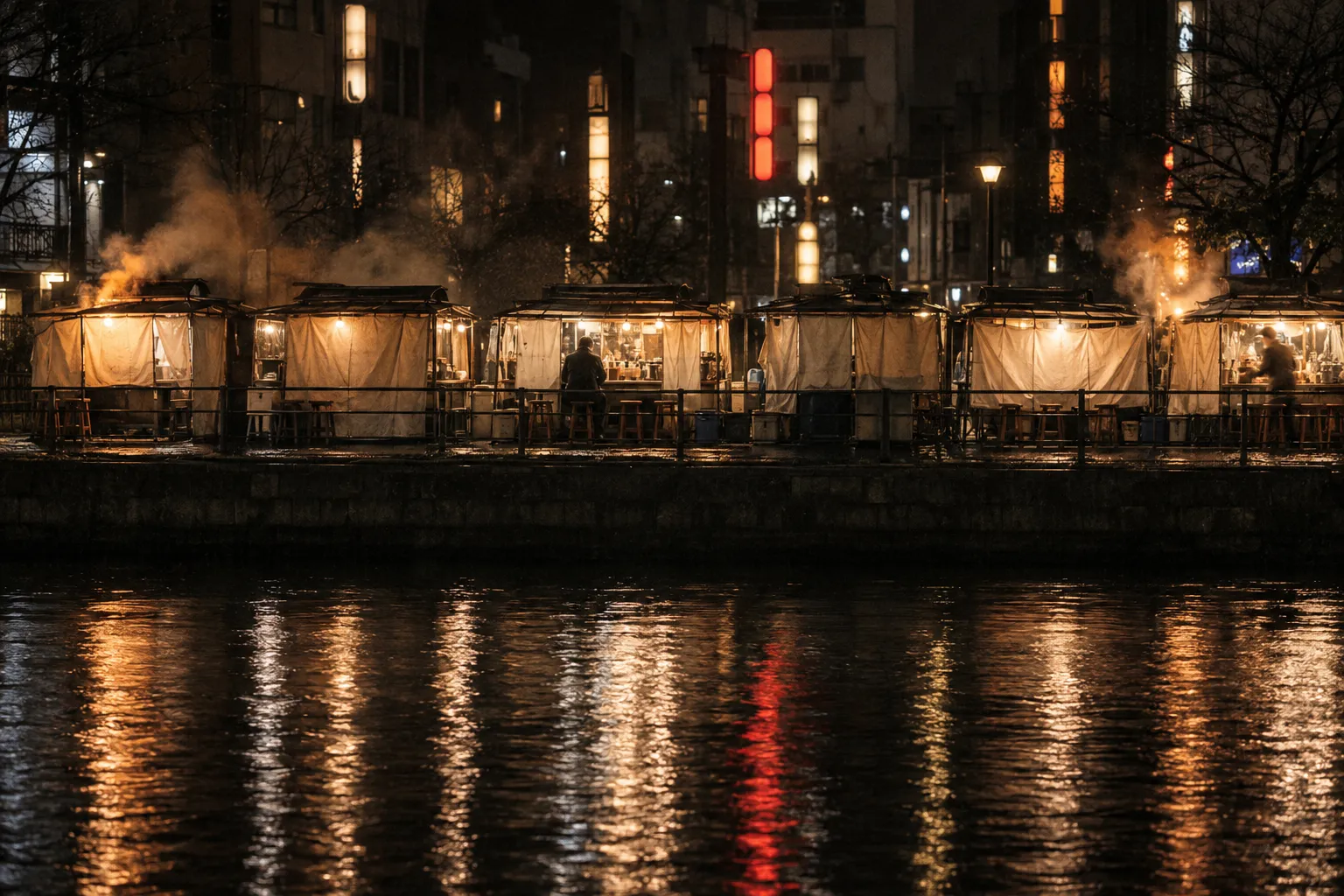
The part I keep an eye on is the street-level recruiting. Osaka has had an ordinance on touting since 2014, with designated no-touting zones that include Dotonbori, and the city publishes the names and addresses of people who ignore repeated cease orders. I read that as proof the problem was real enough to need a law, because people were being steered into bars that charged far more than the street pitch suggested. When someone on the pavement offers me a table, I say no thank you and keep walking, since a bar that needs a person outside to find customers has told me what I need to know.
Hozenji Yokocho Is the Quiet Half of Namba
Hozenji Yokocho is a pair of narrow stone lanes beside Hozenji Temple, about 80 metres long in total, and it sits less than two minutes’ walk from the canal noise. Around 60 small restaurants and bars line the lanes, and the lanterns come on at night, which makes it the most atmospheric stretch of the south side.
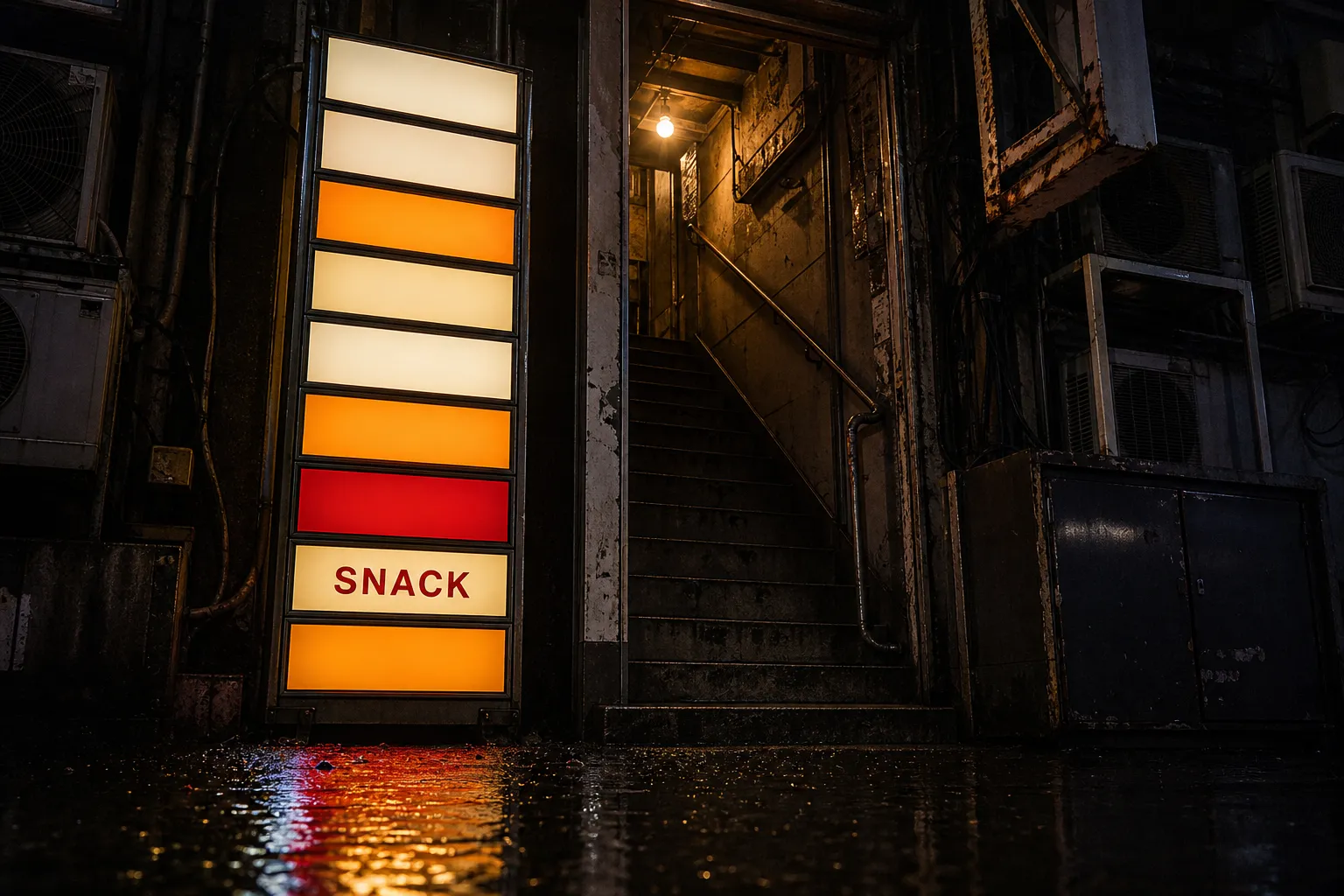
I go here for the first drink, because the rooms are small enough that the owner talks to everyone and nobody is anonymous for long. The famous moss-covered statue of Fudo sits in the lane, and people pour water over it for luck in love and business, which gives the place a tourist ritual without turning it into a theme park. The cost is the standard small-bar grammar I covered in the otoshi post, a seat charge and a first dish that arrives whether or not I asked for it. I ask at the door when there is no menu in sight, and in a room this size the answer takes about ten seconds.
Shinsekai Is the Cheap Version of the Night
Shinsekai is where I go when I want the evening to cost almost nothing, because kushikatsu there is priced like laborers’ food, which is how it began. Daruma, the best known chain, lists skewers from about 143 yen ($0.90), and across its menu the range runs from roughly 110 to 300 yen ($0.70 to $1.90) per skewer, so a full counter of fried food and a beer stays well under a single seat fee in a hostess club.
The one rule that matters is that the sauce container is communal, so each skewer gets dipped once and only once. Double dipping is the quickest way to be corrected by a stranger, and the reasoning is as much about thrift as hygiene, since the original customers took only the sauce they needed so the owner could keep prices low. I follow it without complaint, because a counter this honest is a rare thing in Japanese nightlife, where most prices hide behind a menu I can’t read.
Standing Bars Make the Evening Cheap and Social
Tachinomi, the standing bars, are where Osaka feels most different from Tokyo, because a drink can cost under 500 yen ($3.16) and nobody expects me to commit to a table. I use them to warm up, usually for one or two drinks, and the format forces conversation because everyone is pressed against the same counter.
I’ve had more real exchanges standing at a tachinomi than in any bar that asked me to sit. Without a chair there is no pressure to stay, so I leave when the talk dies, and leaving costs nothing. City Unscripted puts Osaka prices at 30 to 40 percent below Tokyo, a figure I can’t verify myself, but it matches the receipts I keep, which are consistently smaller than the ones from Kabukicho or Roppongi.
Amerikamura Runs Younger and Later
Amerikamura, known as Ame-mura, is the youth district west of the canal, and its clubs and bars get busy after midnight. It is the part of Osaka nightlife that feels closest to Shibuya, with a crowd in their twenties, loud music and a lot of people who came to meet each other.
I rarely stay long, mostly because I’m older than the room and it shows. When I do go, I treat it as a place to meet someone who already knows the area, the same way I used a station crossing in Tokyo after matching on Tinder in Japan. The district works well for a first meeting because everybody knows where it is and the streets are busy enough to feel safe.
The Last Train Is the Real Schedule
Osaka’s last trains decide the shape of the night more than any venue does, and they run earlier than most visitors assume. One timetable listing for Namba on the Midosuji Line shows a last southbound train at 23:49 and a last northbound train at 00:26, though the exact time depends on the line, the direction and the day, so I check a route planner on the night rather than trust a number from a blog.
I’ve missed it more than once and paid for it. After the last train the choices are a taxi I didn’t budget for, a 24-hour karaoke room until the first trains at about 5am, or a standing bar that stays open and a long wait for dawn. None of those is a disaster, though each one turns a cheap evening into an expensive one, which is the same lesson nomihodai taught me about the cost of a time limit I hadn’t planned around.
The Darker End Is a Different City Block Entirely
Osaka also has the adult side of nightlife that the travel guides skip, and it sits in different neighbourhoods from the ones above. Tobita Shinchi is the old licensed district in the south, and the happening bars are a separate world again with a phone call and a membership at the door. I wrote about both elsewhere because they are not what most people mean by Osaka nightlife, and mixing them with a night out in Namba would only confuse what each one is.
Between the two sits the hostess club, where the product is a woman’s time at a table, and the kyabakura post covers what that bill looks like. I keep the categories apart on purpose, because the mistakes in this city come from walking into the wrong one believing it was another.
What is the best area for nightlife in Osaka?
For most visitors it is the Namba and Dotonbori area on the south side, with Umeda as the northern alternative. I use Hozenji Yokocho and the side streets for drinks and Shinsekai for cheap food.
Is Osaka nightlife cheaper than Tokyo?
Generally yes, and one guide puts it at 30 to 40 percent less, though I can’t confirm that figure myself. A standing bar drink under 500 yen ($3.16) and skewers from 143 yen ($0.90) are the reason my own bills come out smaller.
Is it safe to go out in Osaka at night?
I’ve never had trouble walking around Namba or Shinsekai at night, and the realistic risk is overspending after a tout steers me into a bar. The anti-touting ordinance exists because that problem was common in Dotonbori, so I ignore anyone offering a table on the street.
When does the last train leave in Osaka?
It depends on the line and the direction, and one listing for Namba on the Midosuji Line shows 23:49 southbound and 00:26 northbound. I check a route planner on the day, because a missed train is the most expensive mistake of the night.