Roppongi is the one district in Tokyo where strangers speak to me in English on the street, and I stopped reading that as hospitality a long time ago. English on the pavement here is a pricing signal rather than a courtesy, because the venues that have to explain themselves to foreigners tend to be the venues whose terms don’t survive being read slowly. I’ve had ordinary good nights in Roppongi and I’ve had one genuinely expensive one. The difference every single time was whether I chose the door myself or let somebody on the corner choose it for me.
Roppongi Runs on Foreigners in a Way the Rest of Tokyo Doesn’t
The district sits in Minato ward within walking distance of a dozen embassies, and it has spent decades as the part of Tokyo built for people who don’t live here. That history is the entire character of the place. Shinjuku and Shibuya absorb foreign drinkers into a crowd that stays mostly Japanese, whereas Roppongi arranges its economy around them, and the difference announces itself within about thirty seconds of coming up from the station.
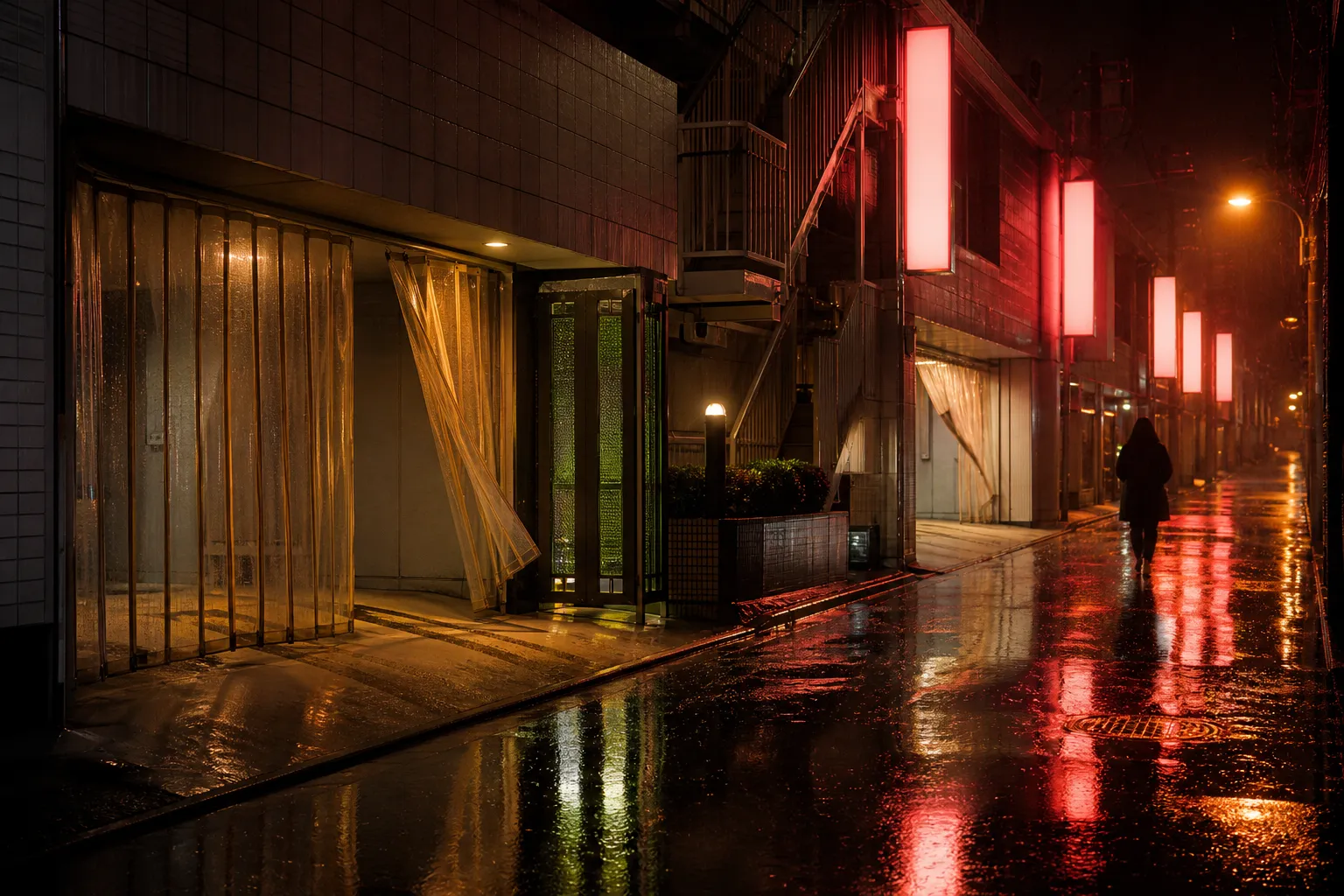
The Shuto Expressway runs directly over the main crossing, which means the centre of the district never gets proper light even at midday. At night that viaduct turns the junction into a low ceiling of concrete with signage stacked underneath it, and the effect is less glamorous than the tourism pages suggest. What actually surrounds you is a dense grid of narrow buildings where each floor holds a different bar, and the only thing distinguishing one column of signs from the next is which of them has somebody standing outside.
The Approach Happens Before You’ve Chosen Anything
Street touts are the first working part of Roppongi that a visitor meets, and they’re positioned at the crossing precisely because that’s where people pause to decide. The pitch arrives in English, it’s friendly, and it usually contains a number low enough to sound like a bargain. That number is normally real, which is what makes the whole thing effective on people who think of themselves as careful. It simply covers far less of the evening than the person hearing it assumes.
I get approached far more often than the Japanese men walking a metre ahead of me, and that isn’t a complaint so much as a description of how the maths works. A foreigner can’t read the plate by the lift, won’t quote the local ordinance back at anybody, and isn’t returning next Friday to make a scene in front of the regulars. The same logic operates over in Kabukicho, though the districts spend that advantage on slightly different things. Roppongi’s version is smoother and speaks better English, which somehow makes it easier rather than harder to go along with.
A Night Out Here Has a Published Price and a Real One
The published prices are genuinely easy to find, and they’re not the problem. The larger Roppongi clubs run door charges of roughly 3,000 to 4,500 yen ($19 to $29), with the more selective rooms asking 5,000 yen ($32) or more from anybody who isn’t on a guest list, and drinks starting around 1,200 yen ($7.70). Smaller bars frequently set a minimum spend near 1,500 yen ($9.70) before midnight instead of charging at the door. Those figures are survivable and roughly what a decent night costs in any expensive city.
What inflates a Roppongi bill is almost never the advertised rate. It’s the seating charge nobody mentioned, the small dish that arrives unordered and gets itemised anyway, the weekend surcharge, and a service percentage calculated on the whole stack rather than on the drinks alone. Every one of those line items is completely ordinary elsewhere in Japan. A kyabakura charges by the same grammar and a snack bar does too, and both of them tell you first. The venues worth avoiding in Roppongi use identical vocabulary and simply reverse the order, so the terms surface after you’re seated in a room you’d have to leave past the man who walked you in.
The Embassy Put the District on a List and Left It There
The United States embassy in Tokyo has named Roppongi and Kabukicho as high-risk areas for crime in its standing advice to Americans, citing reports of drink spiking, credit card fraud, extortion and assault in both districts. That language dates back to an alert issued on 1 June 2015 and it has been repeated in various forms across the years since. The pattern it describes is consistent: somebody drinks something they didn’t watch being poured, loses several hours, and discovers afterwards that a large amount went onto their card while they weren’t in a position to object.
I want to be accurate about the scale rather than dramatic, because the tourism copy and the panic copy are both useless. Tokyo remains an extraordinarily safe city to walk around at three in the morning, and nothing about Roppongi changes that at street level. The risk in the district isn’t physical and it very rarely involves violence. It’s financial, it concentrates inside venues you were led to rather than ones you picked, and the embassy’s own advice amounts to declining free drinks, declining invitations from touts, and not drinking alone in an unfamiliar room.
Roppongi and Kabukicho Fail in Different Ways
People compare these two districts constantly and usually get told they’re interchangeable, which isn’t my experience of either. Kabukicho is a Japanese nightlife district that foreigners also visit, so most of its business runs on Japanese customers and Japanese expectations, and the padding there tends to be a domestic practice applied to a tourist. Roppongi is a foreigner-facing district first, so its entire product is built for somebody who arrived recently, doesn’t speak the language, and is leaving in a week.
That distinction changes what each place does to a careless evening. In Kabukicho the exposure is vertical, because the money lives upstairs behind a column of identical backlit plates with no prices on any of them. In Roppongi the exposure is horizontal and happens out on the pavement, since the approach reaches you in the open, in your own language, before you’ve committed to a building at all. Neither district is dangerous in the way the internet enjoys implying. Both of them punish the same specific decision, which is letting a stranger pick the room.
The Last Train Decides What the Night Actually Costs
Roppongi has no legal closing time, and the trains absolutely do. The final Hibiya line service out of Roppongi runs at around half past midnight, and once it’s gone the district keeps trading for another five or six hours with no cheap way out of it. That gap is the single most reliable way a reasonable evening turns into an unreasonable receipt, and it catches people who budgeted carefully for drinks and not at all for the journey home.
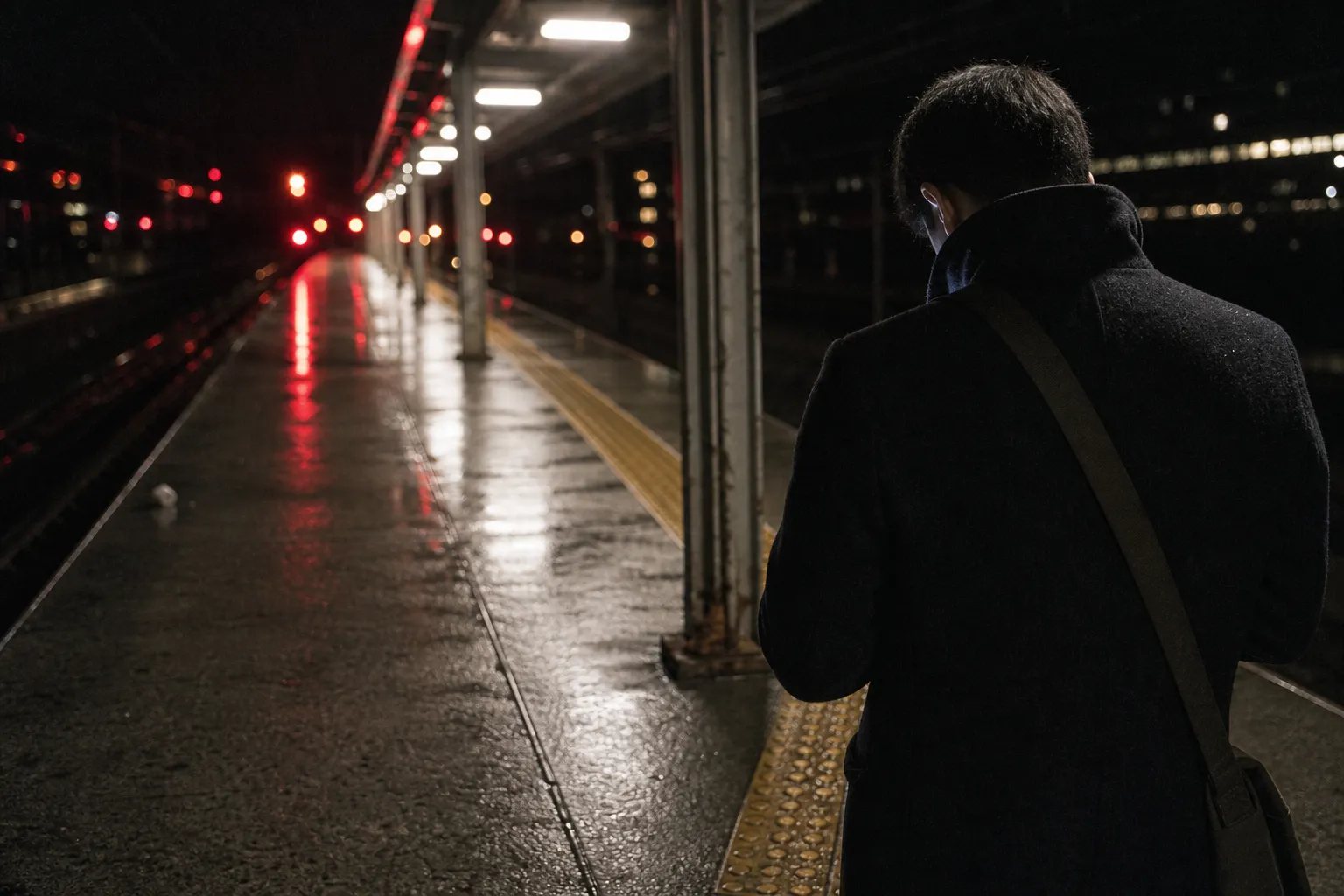
A Tokyo taxi starts at 500 yen ($3.23) on the meter, which sounds harmless until the late-night rule applies. Between ten at night and five in the morning the whole metered fare carries a twenty percent surcharge, and Roppongi to most places anyone actually sleeps is not a short ride. I’ve paid more for the car home than for everything I drank, more than once, and I’ve also stayed out until the trains restarted purely because the arithmetic of leaving looked worse than the arithmetic of staying. Anyone weighing that against a love hotel rest block is doing the same sum I was, and the answer genuinely depends on the hour.
The honest summary of Roppongi is that it’s a perfectly good place to drink and a bad place to improvise. When I walk in with a specific bar in mind, check the charges at the door before sitting down, and keep track of when the last train leaves, it’s an ordinary expensive night in an ordinary expensive city. When I arrive without a plan and let the friendliest person on the crossing solve that for me, it stops being ordinary and the bill explains why.
Is Roppongi safe to walk around at night?
Walking around Roppongi is about as safe as walking anywhere in Tokyo, which is to say considerably safer than most large cities. The recurring problem there is financial rather than physical, and it happens inside venues rather than out on the street.
How much should I budget for a night in Roppongi?
Door charges run roughly 3,000 to 5,000 yen ($19 to $32) at the bigger clubs and drinks start near 1,200 yen ($7.70), so a straightforward night sits in the range you’d expect from any expensive capital. Budget separately for the taxi, because that’s the part people forget.
Should I go to Roppongi or Kabukicho?
Kabukicho is the better choice for seeing a Japanese nightlife district doing its normal business, while Roppongi is the easier one to get around with no Japanese at all. Both reward choosing your own venue and both punish following somebody who approached you first.
Are the touts in Roppongi actually dangerous?
Most of them are salespeople working on commission rather than anything more sinister, and ignoring them carries no consequence whatsoever. The risk isn’t the person on the pavement so much as the room they’re paid to deliver you into.